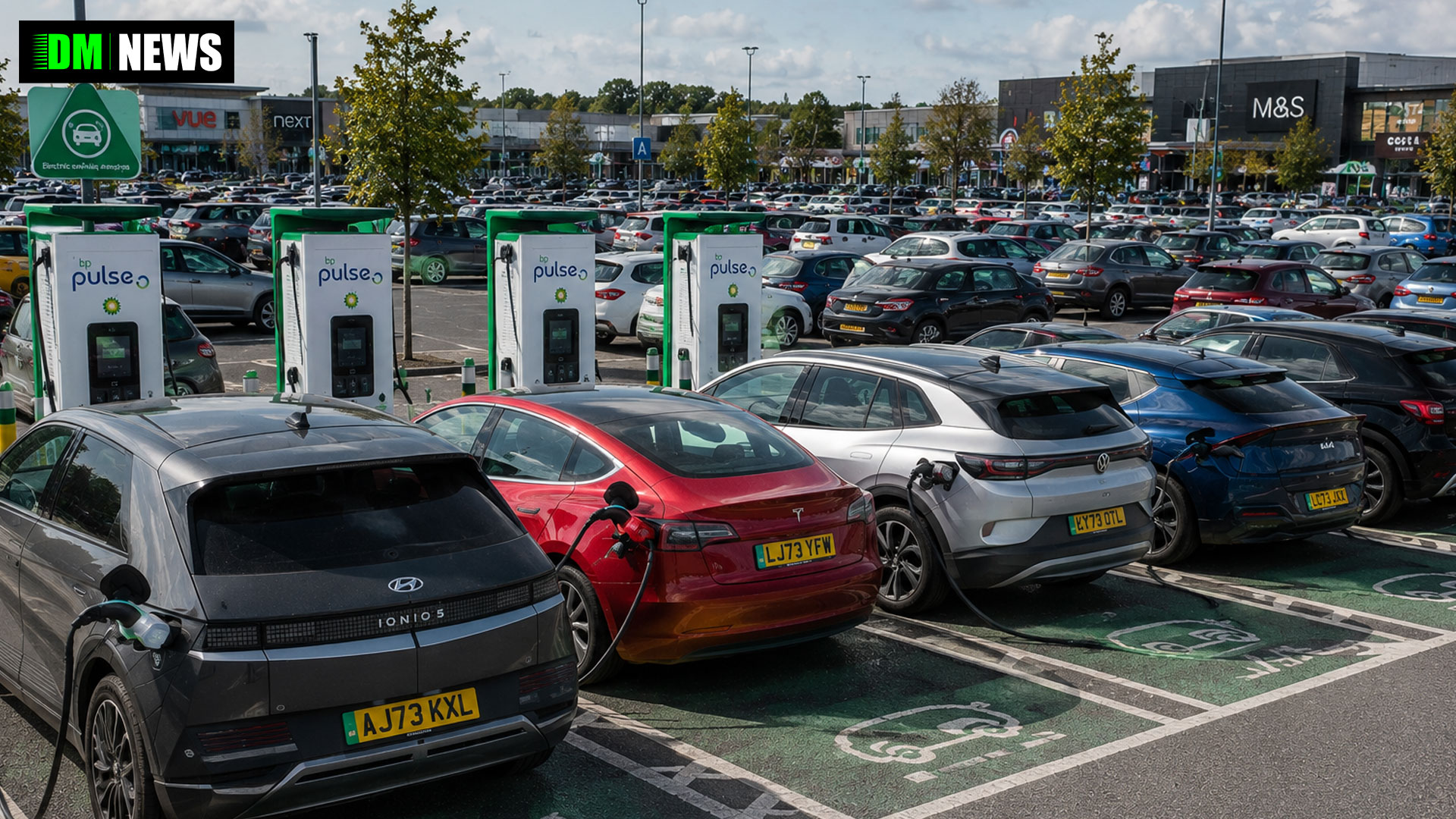

New HMRC advisory mileage rates for company cars have come into force today, 1 September, changing the amounts businesses can use when reimbursing employees for fuel on business journeys.
The quarterly update affects petrol, diesel and LPG company cars, while the separate rates introduced for electric vehicles remain at 7p per mile for home charging and 15p per mile for public charging.
For petrol company cars with engines of 1,400cc or less, the advisory rate remains at 14p per mile.
Petrol cars between 1,401cc and 2,000cc remain at 17p per mile.
However, the rate for petrol vehicles with engines above 2,000cc has increased from 26p to 27p per mile.
There are reductions for some diesel company cars.
Diesel vehicles with engines of 1,600cc or less remain at 15p per mile, while the rate for engines between 1,601cc and 2,000cc falls from 17p to 16p per mile.
Diesel cars with engines larger than 2,000cc move from 23p to 22p per mile.
LPG rates are now 11p per mile for engines up to 1,400cc, 13p for engines between 1,401cc and 2,000cc and 20p for engines above 2,000cc.
The previous rate for larger LPG cars was 21p, meaning those vehicles see a 1p-per-mile reduction.
HMRC has also retained its two-tier system for fully electric company cars.
From 1 September, the advisory electric rate remains 7p per mile when a vehicle is charged at home and 15p per mile when it is charged using public infrastructure.
The public charging figure is based on average prices for slow and fast public chargers operating below 50kW rather than the often more expensive rapid and ultra-rapid charging networks.
For businesses and professional drivers considering the running costs of their vehicles, DM Site Builder also allows businesses to build their own website completely free, with a custom-domain option available for those wanting their own web address.

HMRC says the home electric rate is calculated using electricity-price data from the Department for Energy Security and Net Zero and the Office for National Statistics, alongside vehicle efficiency and company-car sales information.
The public charging calculation additionally uses data from the Zapmap Price Index.
HMRC allows mileage to be apportioned between residential and public charging when a company electric car uses both, provided the calculation is fair and reasonable.
Businesses can also reimburse a higher amount where they can demonstrate that the actual cost per mile was higher than HMRC’s advisory figure.
This could be particularly relevant to drivers relying on expensive rapid or ultra-rapid public charging, where the real electricity cost may substantially exceed the assumptions used to calculate the standard 15p rate.
It is important to distinguish the advisory fuel rates from HMRC’s Approved Mileage Allowance Payments.
The advisory rates covered by today’s change apply specifically to employees using company cars.
They can be used when employers reimburse employees for business travel in company vehicles or when employees repay their employer for fuel used on private journeys.
HMRC explicitly states that these rates must not be used in other circumstances.
Hybrid cars continue to be treated as either petrol or diesel vehicles for the purposes of the advisory rates.
HMRC reviews the figures every three months, with scheduled updates taking place on 1 March, 1 June, 1 September and 1 December.
The department also allows the previous rates to continue being used for up to one month after new rates take effect.
For high-mileage businesses and fleets, even a change of 1p per mile can become significant when multiplied across thousands of business miles and multiple vehicles.
Thanks for visiting DM News! If you’ve got a question, a story tip, or anything you’d like to share, head over to DriverMatty.com — I love to hear from you. While you’re there, don’t forget to check out my other websites and social media channels.
Sources
HM Revenue & Customs – Advisory Fuel Rates From 1 September 2026