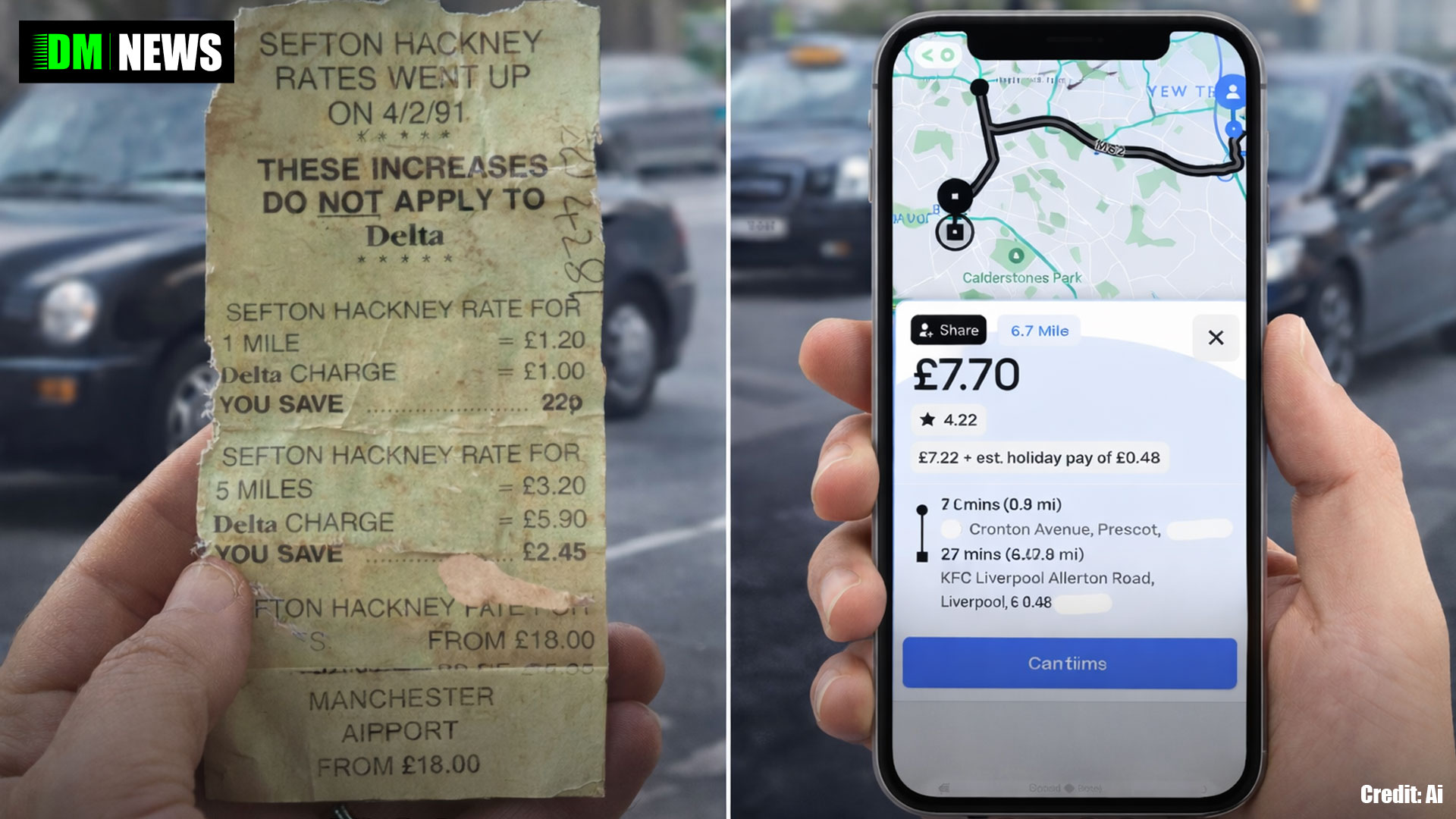
A striking comparison between two images highlights how taxi pricing has evolved over the past 35 years.
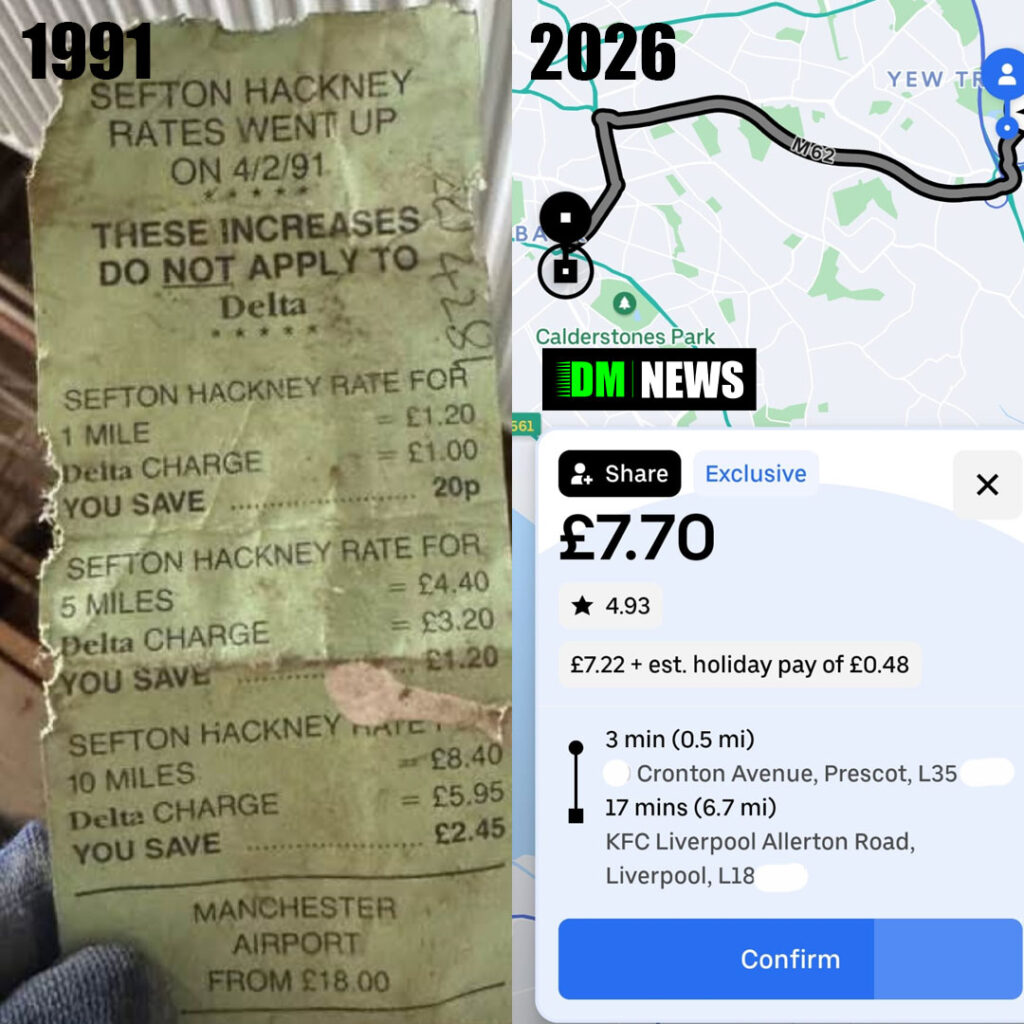
On the left, we see an original 1991 Sefton Hackney carriage rate card, which also advertises lower Delta private hire fares. On the right, a 2026 Uber fare estimate shows the price for a modern app-based journey between Prescot and Liverpool (6.7 miles).
At first glance the modern fare looks higher, but when inflation is considered, the comparison becomes far more interesting.
What Taxi Fares Looked Like in 1991
The paper rate card shows official Sefton Hackney carriage tariffs, along with the discounted Delta private hire fares that customers could pay instead.
Sefton Hackney Rates (1991)
- 1 mile: £1.20
- 5 miles: £4.40
- 10 miles: £8.40
Delta Private Hire Rates (1991)
- 1 mile: £1.00
- 5 miles: £3.20
- 10 miles: £5.95
The leaflet even promoted the savings for choosing private hire instead of a Hackney taxi:
- Save 20p on a 1-mile journey
- Save £1.20 on a 5-mile journey
- Save £2.45 on a 10-mile journey
At the bottom of the card it also advertises Manchester Airport journeys from £18, which today seems extremely cheap.
Adjusting the 1991 Prices for Inflation
To understand the real comparison, we need to adjust the 1991 fares into 2026 money.
Using long-term UK inflation averages, £1 in 1991 is roughly equivalent to about £2.30–£2.40 today.
That means the 1991 fares would roughly equal:
Sefton Hackney (inflation adjusted to 2026)
- 1 mile: ~£2.75–£2.90
- 5 miles: ~£10.10–£10.50
- 10 miles: ~£19.30–£20.20
Delta Private Hire (inflation-adjusted)
- 1 mile: ~£2.30–£2.40
- 5 miles: ~£7.35–£7.70
- 10 miles: ~£13.70–£14.30
Even the £18 Manchester Airport fare would be around £41–£43 in today’s money.

The 2026 Uber Fare
The modern screenshot shows a journey booked through Uber:
- Pickup: Cronton Avenue, Prescot
- Destination: Allerton Road, Liverpool
- Distance: 6.7 miles
- Estimated time: 17 minutes
The fare estimate shown is £7.70, made up of:
- £7.22 fare
- £0.48 estimated holiday pay
The driver also shows a 4.93 rating, highlighting another major difference between the two eras — customer rating systems.
How the Prices Really Compare
When inflation is factored in, something surprising appears.
| Journey | 1991 Price | 1991 Price in 2026 Money | 2026 Uber |
|---|---|---|---|
| ~5 miles (Hackney) | £4.40 | ~£10+ | ~£7–£8 |
| ~5 miles (Private Hire) | £3.20 | ~£7.50 | ~£7–£8 |
| ~7 miles equivalent | ~£5–£6 | ~£12+ | £7.70 |
This suggests that modern app-based fares are often comparable — or sometimes cheaper — than traditional taxi fares once inflation is considered.
However, driver earnings, commission, and operating costs have changed dramatically over the same period.
From Paper Rate Cards to Smartphone Apps
The two images perfectly capture the transformation of the taxi industry.
1991
- Paper rate cards
- Telephone dispatch bookings
- Fixed tariffs set by councils
- Local operators such as Delta
2026
- Smartphone apps
- GPS tracking and real-time routing
- Algorithm pricing
- Driver ratings and reviews
The technology may have changed completely, but the competition between Hackney carriages and private hire services has existed for decades.
DM News Commentary
This comparison highlights something many drivers already know — the industry has always been competitive on price.
Even in 1991, private hire firms were advertising cheaper fares than Hackney taxis. Today, Uber and similar platforms are simply the latest evolution of that same competition.
The real difference today is technology and scale. Apps make it easier for passengers to compare prices instantly, while drivers face new pressures from commission fees, fuel prices, insurance, and licensing costs.
Looking at the inflation-adjusted figures, it also raises a question many drivers are asking: are fares really keeping up with the cost of doing the job?
Thanks for visiting DM News! If you’ve got a question, story, or anything you’d like to say, head over to DriverMatty.com — I’d love to hear from you! And while you’re there, don’t forget to check out my other websites and social media channels.