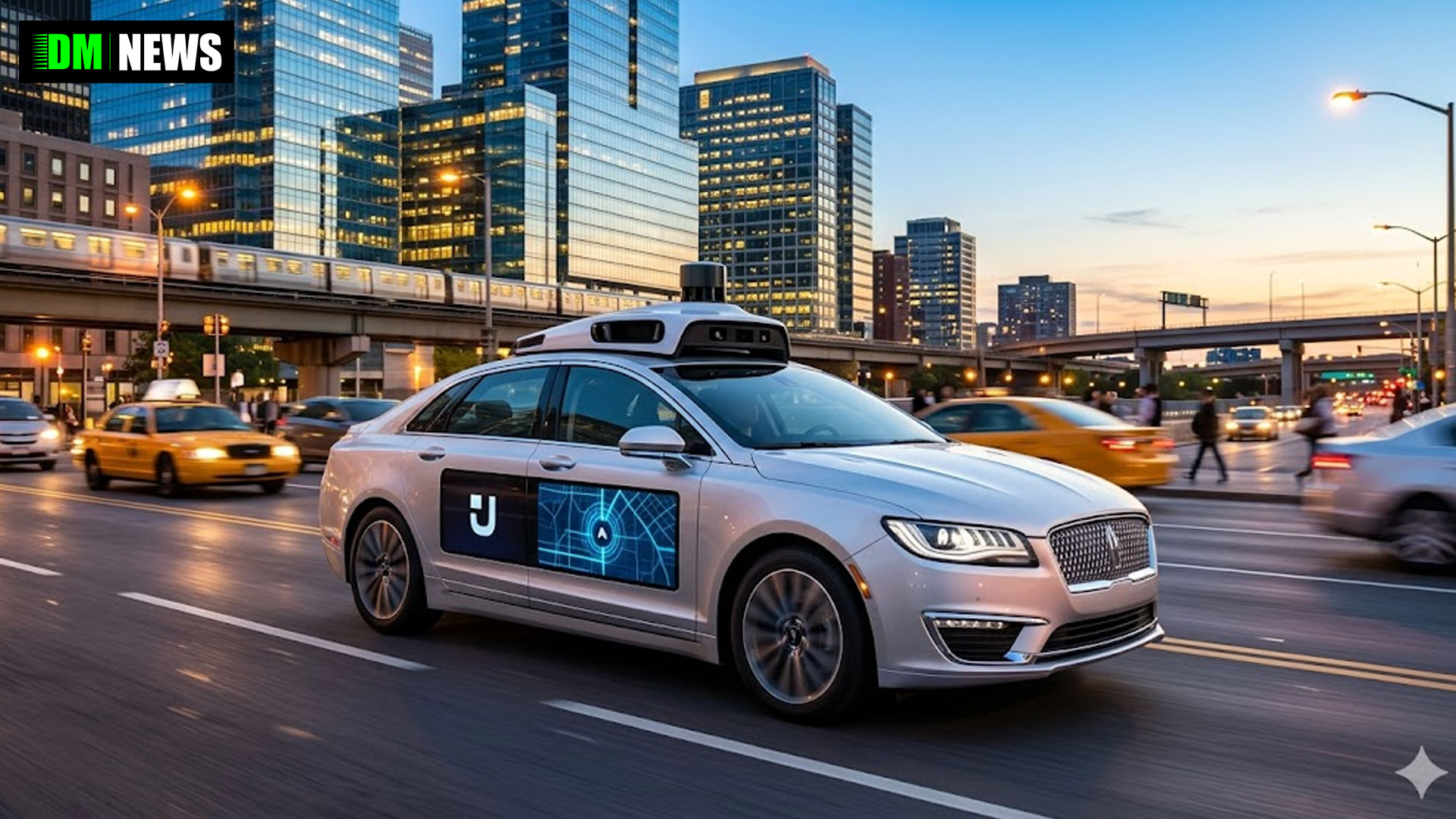
In a major departure from its traditional “asset-light” business model, Uber Technologies has announced a staggering $10 billion (£8 billion) investment into the autonomous vehicle sector. This strategic pivot, revealed on 15 April 2026, signals Uber’s intention to own a significant portion of the driverless future rather than just providing the platform for it.
Shifting Gears: From Software to Steel
For over a decade, Uber has dominated the gig economy by connecting independent drivers with riders, avoiding the heavy costs of owning vehicle fleets. However, the rise of competitors like Waymo and Tesla’s robotaxi network has pushed the firm to rethink its strategy to avoid being sidelined.
The $10 billion commitment is broken down into two main pillars:
- $7.5 Billion for Fleet Acquisition: Uber plans to purchase thousands of autonomous vehicles directly. This includes a massive expansion of its partnership with Lucid Group—aiming for at least 35,000 vehicles—and ongoing collaborations with Rivian to secure long-term vehicle supply of up to 50,000 units.
- $2.5 Billion in Equity Stakes: Uber is doubling down on the tech itself, taking direct ownership stakes in autonomous driving developers. This includes investments in WeRide, Pony.ai, and an increased total capital flow into Lucid.

Global Expansion Plans
Uber isn’t just looking at the US market. The company has outlined an ambitious roadmap to roll out robotaxi services in at least 28 cities by 2028. This global push is already in motion; following successful launches in Abu Dhabi, Uber and WeRide recently partnered with Dubai’s Road and Transport Authority (RTA) to bring driverless cars to Dubai. Meanwhile, a premium service featuring the Lucid Gravity SUV is slated for a major US city launch by late 2026.
CEO Dara Khosrowshahi described the move as a way to ensure Uber remains the “operating system” for urban mobility. By integrating autonomous cars alongside human-driven ones in a “hybrid network,” Uber hopes to maintain reliability during peak demand when current AI tech might still struggle with complex weather or traffic scenarios.
Why Now?
The shift comes at a time of renewed momentum in the AI sector. With hardware costs falling and software-defined vehicle platforms becoming more efficient, the “unit economics” of robotaxis are finally starting to make sense for large-scale operators. For investors, this $10 billion bet is a clear sign that Uber views autonomy not as a distant experiment, but as a core requirement for survival in the next decade of transport.
Thanks for visiting DM News! If you’ve got a question, a story tip, or anything you like to share, head over to DriverMatty.com — I love to hear from you. While you’re there, don’t forget to check out my other websites and social media channels.
Sources:
- Financial Times: Uber commits $10bn to robotaxis in strategy shift
- Reuters: Uber plans $10B robotaxi push in major strategy shift
- Uber Investor Relations: Uber and WeRide Partner with Dubai’s Road and Transport Authority
- Uber Investor Relations: Lucid, Nuro, and Uber Partner on Next-Generation Autonomous Robotaxi Program
- Benzinga: Uber Bets Big On Robotaxis With $10 Billion Investment Push