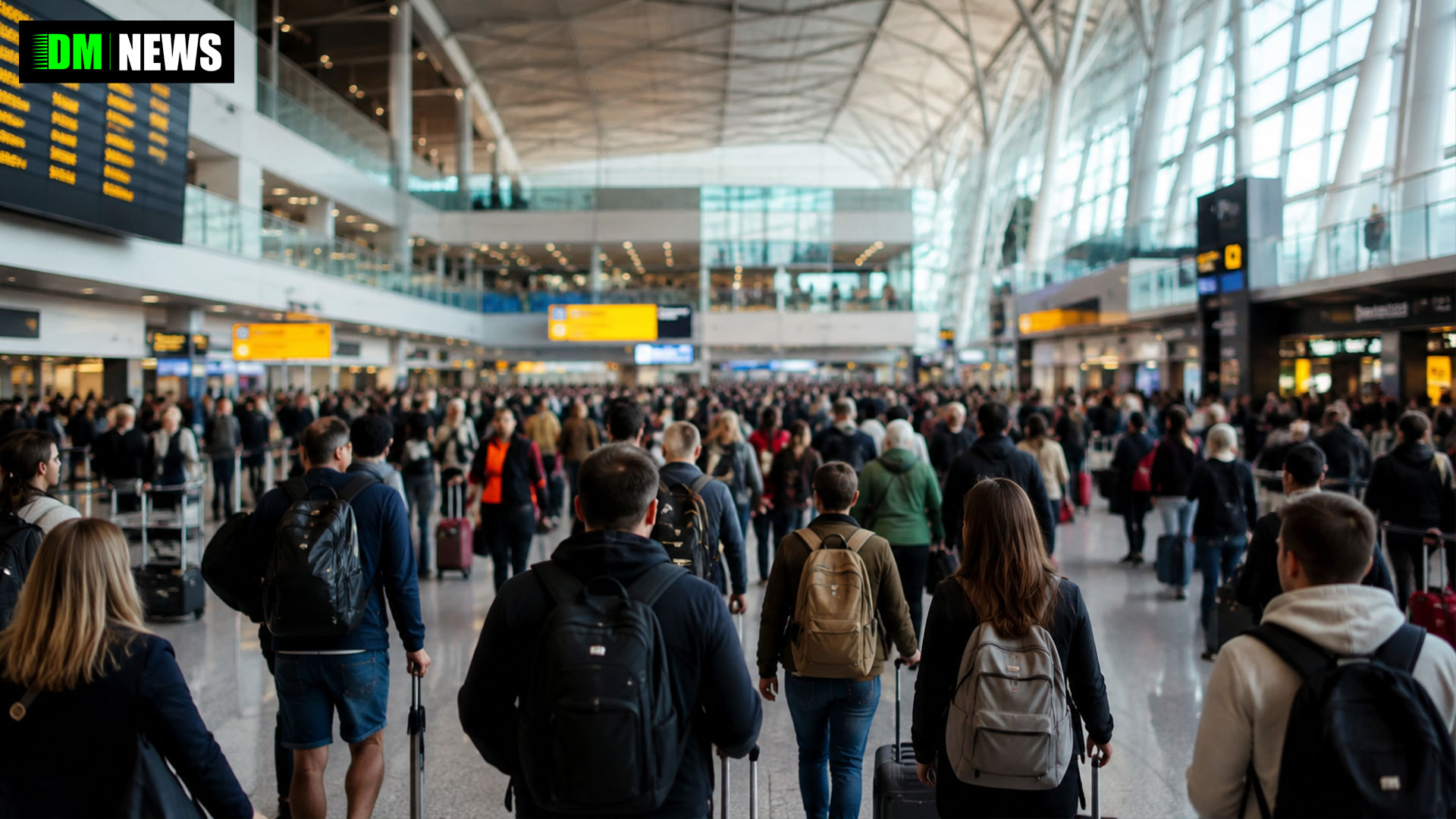

The European Union’s long-anticipated Entry/Exit System (EES) reached full, mandatory implementation on 10 April 2026, and the results have been described by travel leaders as a total “shambles.” After a phased rollout that began last year, the system is now a legal requirement across all 29 Schengen countries, leading to massive bottlenecks at major transport hubs.
Airports Struggle with Biometric Processing
The first full weekend of the new system saw unprecedented delays at European airports. On Sunday, 12 April, over 100 Manchester-bound passengers were reportedly stranded at Milan Linate after three-hour queues at passport control caused them to miss their scheduled flights.
The disruption isn’t isolated to Italy. Reports of two-to-three-hour waits have flooded in from Munich, Pisa, Faro, and Schiphol. Michael O’Leary, CEO of Ryanair, has been vocal in his criticism, calling the implementation a total failure and noting that some flights have been forced to depart empty because passengers were stuck behind biometric kiosks.

The “90-Day Escape Valve”
In response to the growing crisis, several countries have already moved to suspend biometric collection temporarily. Under EU rules, border authorities can exercise “discretionary flexibility” for up to 90 days to maintain the flow of traffic during emergencies.
- Portugal and Spain have reportedly paused fingerprinting at peak times to prevent unsafe overcrowding in terminals.
- Lisbon Airport, which saw seven-hour queues during earlier trials, has drafted in 80 additional officers to manage the backlog.
Dover and Eurotunnel: A Strategic Delay
For those crossing the Channel, the impact has been slightly mitigated by a tactical retreat from authorities. Both Eurotunnel and Eurostar confirmed that they would not be enforcing full biometric data collection during the immediate April peak to avoid total gridlock at the Port of Dover and London St Pancras. However, the Home Office has still warned UK travellers to allow significant extra time as the system continues to be integrated.
What is EES?
The system replaces traditional physical passport stamps with a digital record. On their first visit to the Schengen area, non-EU travellers (including UK citizens) must provide:
- Four fingerprints
- A facial scan
- Digital registration of travel documents
While the EU argues the system has already identified thousands of people with fraudulent documents, the immediate cost for holidaymakers is being measured in missed flights and significant travel delays.
Thanks for visiting DM News! If you’ve got a question, a story tip, or anything you like to share, head over to DriverMatty.com — I love to hear from you. While you’re there, don’t forget to check out my other websites and social media channels.
Sources:
- The Guardian: Biometric checks stalled again for cross-Channel travellers
- Manchester Evening News: EU travel chaos ‘warning sign’ as passengers miss flights
- Travel Gossip: Disruption and delays reported during first few days of EES
- Biometric Update: EES rollout triggers delays at EU airports
- European Commission: Entry/Exit System becomes fully operational