
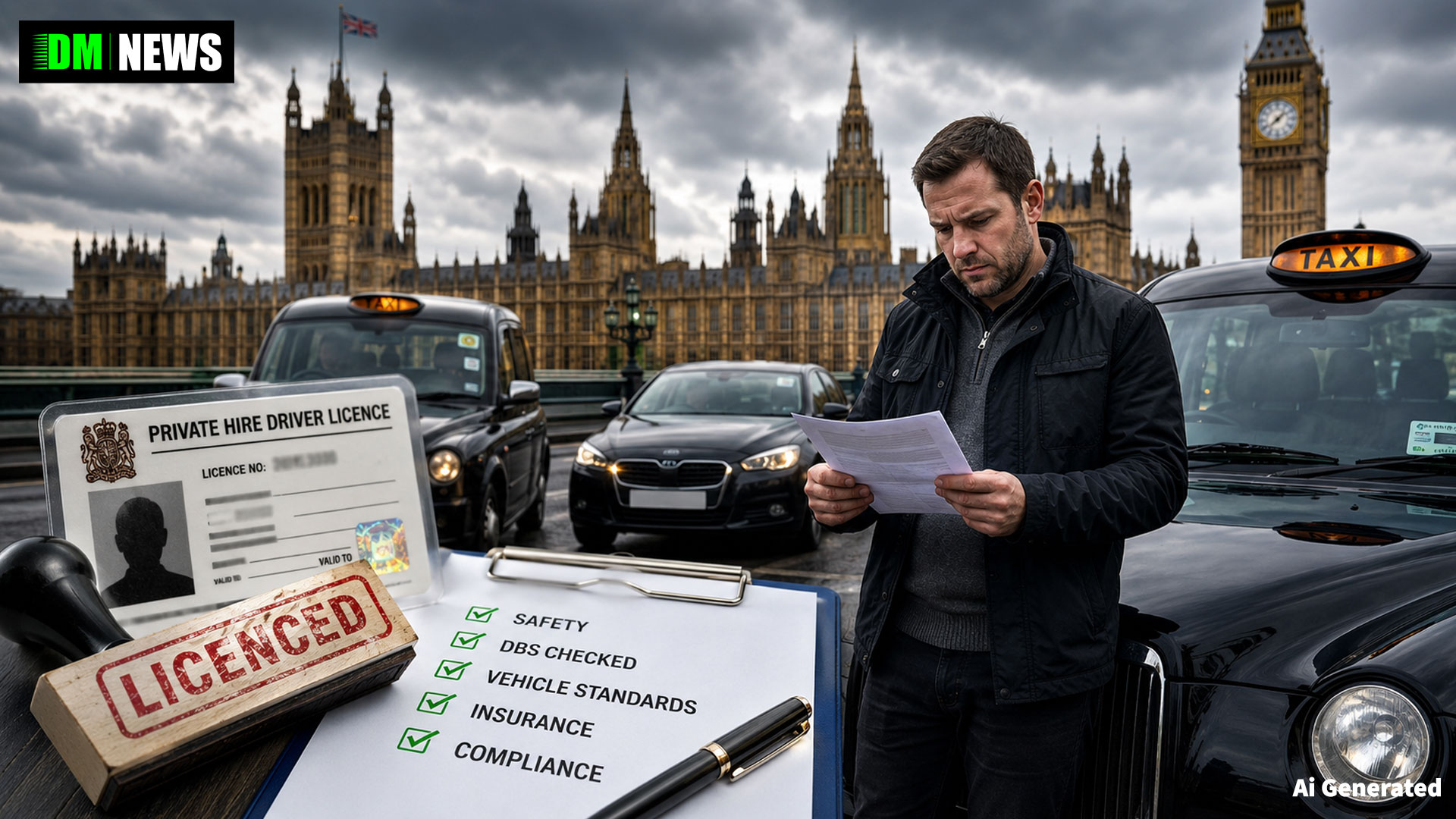
The Transport Committee has told the Government that its plan for national minimum standards for taxis must not end up being “low by default”, warning that weak rules would simply entrench the very problems they are meant to fix.
In a report titled “Raising the standard”, published this week, the cross-party group of MPs examined the licensing of taxis and private hire vehicles across England. Alongside its concerns about minimum standards, the report calls for a “clear plan” to bring down high levels of out-of-area working — the practice where a driver gets licensed in one area but operates mainly in another.

The backdrop to all this is a patchwork system. There are currently more than 260 licensing authorities in England, each setting its own standards, which has led to wide variation in how drivers and vehicles are regulated depending on where you are.
The Government announced back in November 2025 that it would legislate to introduce national minimum standards. The Committee says it welcomes that intention, but it isn’t convinced minimum standards alone will be enough. The worry is what’s known as the “lowest common denominator” effect — if the floor is set too low, authorities have little reason to do more than the bare minimum.
The report draws a clear distinction between two approaches. Minimum standards set a floor that every authority must meet, while still letting individual authorities go further where local circumstances justify it. Absolute national standards, by contrast, would apply one single set of conditions everywhere, with no scope to add to them or depart from them. The Committee heard arguments for both during its inquiry, and noted that the Department already accepts there should effectively be an absolute standard in areas like safety.
Out-of-area working drew some of the strongest feeling. The Committee heard fierce opposition to the practice, with the Blackpool Taxi Association describing it in written evidence as “the root cause to all that’s wrong”. The core concern is “licence shopping” — where drivers and operators deliberately seek out an authority with laxer requirements than the area they actually work in.
That concern isn’t new. The 2025 report into group-based sexual exploitation by Baroness Louise Casey warned that licence shopping was undermining safeguarding efforts.
The Committee was clear that an outright ban on out-of-area working would be impractical, but urged the Department to bring forward a plan to curtail it and give drivers more reason to license in the area where they operate. Doing so, the report argues, would make enforcement easier and help restore trust that has been lost across the sector.
Transport Committee Chair Ruth Cadbury said the inquiry had repeatedly heard concerns about inconsistent standards up and down the country, as well as deep-seated opposition to routine out-of-area working. She said the Committee welcomes the Government’s determination to turn things around, but that the standards must be “high, comprehensive and consistent, with safety as absolute — both for drivers and passengers”. She added that taking tough action now would disincentivise licence shopping and ensure passengers get the same high standards wherever they are in the country.
The report adds further pressure on ministers ahead of forthcoming legislation. In the King’s Speech in May 2026, the Government announced plans to further modernise the system, including a national database of all licensed taxis and private hire vehicles. With safety, enforcement and public confidence now firmly at the centre of the debate, how the final reforms are shaped will be watched closely across the trade.
Thanks for visiting DM News! If you’ve got a question, a story tip, or anything you’d like to share, head over to DriverMatty.com — I love to hear from you. While you’re there, don’t forget to check out my other websites and social media channels.