
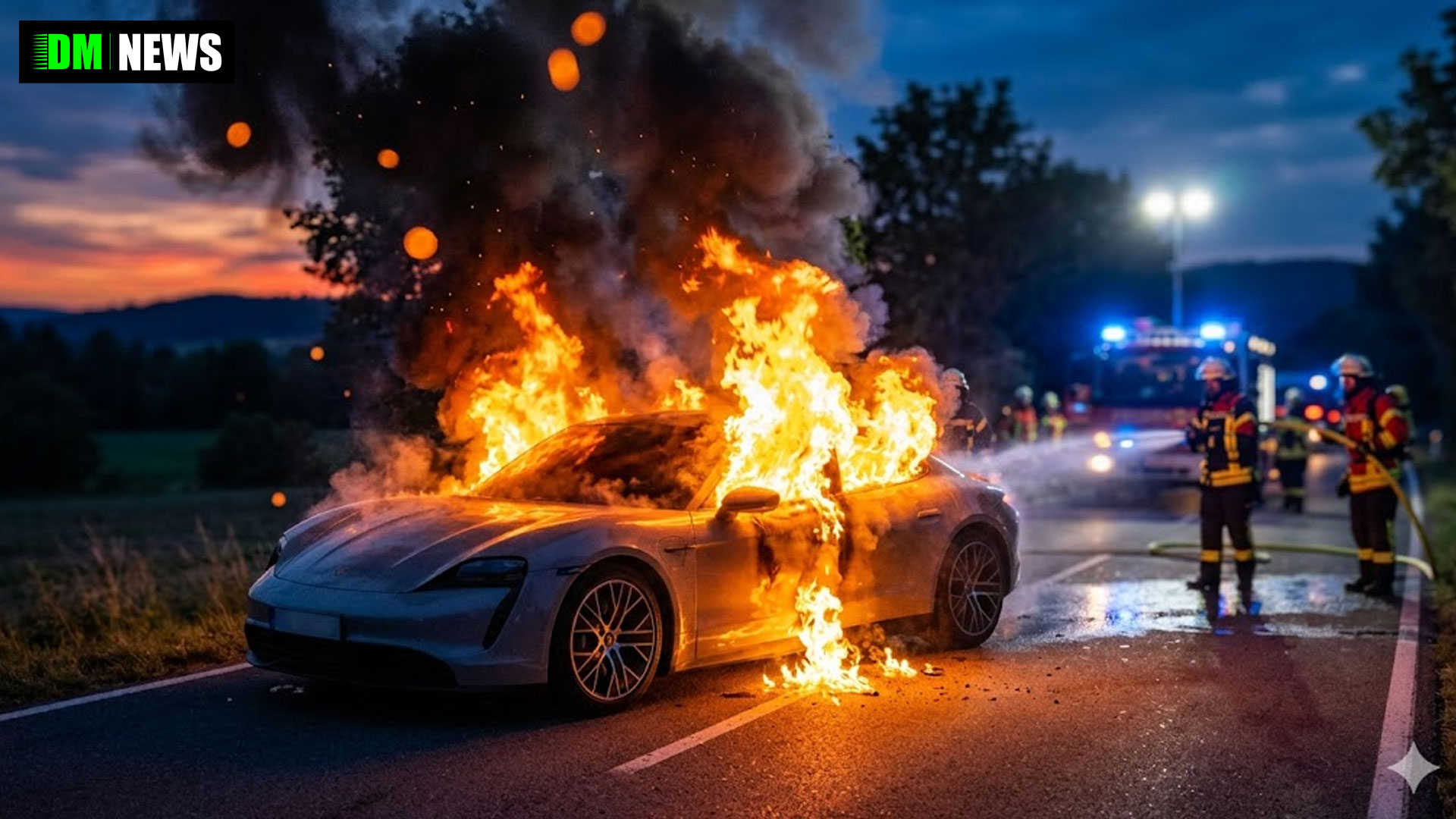
There has been a lot of talk recently about electric vehicles (EVs) and the risk of them catching fire. High-profile headlines often make it seem like these cars are ticking time bombs, but when we look at the actual data for 2026, the reality is quite different.
While an EV fire is undeniably more difficult for fire services to extinguish due to “thermal runaway” in lithium-ion batteries, they happen far less frequently than fires in traditional petrol or diesel cars.

The Numbers: How Do They Compare?
Recent 2025 and 2026 statistics from across Europe and the UK show a clear gap in fire frequency between different fuel types. On average, internal combustion engine (ICE) vehicles are significantly more likely to ignite than their electric counterparts.
| Vehicle Type | Fire Probability (Approx.) | Risk Comparison |
| Electric (EV) | 0.0012% | Lowest risk category. |
| Petrol / Diesel | 0.1% | Roughly 80 to 100 times more likely to catch fire than an EV. |
| Hybrid | 3.4% | Highest risk, likely due to having both high-voltage batteries and flammable fuel systems. |
Why the Concern?
If EVs are statistically safer, why is everyone worried? It comes down to how they burn, not how often.
- Intensity: Lithium-ion battery fires burn much hotter, often reaching temperatures between 700°C and 1000°C.
- Duration: While a petrol fire can be extinguished relatively quickly with water or foam, an EV battery can “re-ignite” hours or even days later.
- The “E-Bike” Confusion: Many headlines combine “electric vehicle” fires with e-bikes and e-scooters. In London alone, e-bike fires hit record highs in 2025, often due to unregulated chargers or DIY conversion kits. Purpose-built electric cars have much more rigorous safety cooling systems and reinforced battery casings.
What Causes an EV Fire?
For a modern electric car to catch fire, it usually requires a significant “trigger” event. It isn’t just spontaneous:
- Serious Collisions: Severe structural damage that punctures the battery casing.
- Manufacturing Defects: Rare errors in the cell chemistry (usually resulting in a manufacturer recall).
- External Factors: Being parked near another fire or being submerged in floodwater for long periods.
Verdict: Should You Worry?
In short: no. You are statistically much safer sitting on top of a battery pack than you are sitting next to a tank of highly flammable liquid fuel. While the fire service is still adapting to the specific challenges of lithium fires, the likelihood of you ever experiencing one in an EV remains incredibly low.
Thanks for visiting DM News! If you’ve got a question, a story tip, or anything you like to share, head over to DriverMatty.com — I love to hear from you. While you’re there, don’t forget to check out my other websites and social media channels.
Sources:
- Electric Car Scheme: Affording Sustainability: What UK Drivers Really Think About Going Electric in 2026
- Swedish Civil Contingencies Agency (MSB): Statistical database – Vehicle and Vessel Fires
- London Fire Brigade (LFB): E-Mobility Incident Data and Activity Overview 2025
- National Fire Protection Association (NFPA): Latest Research and Fire Statistical Reports 2026