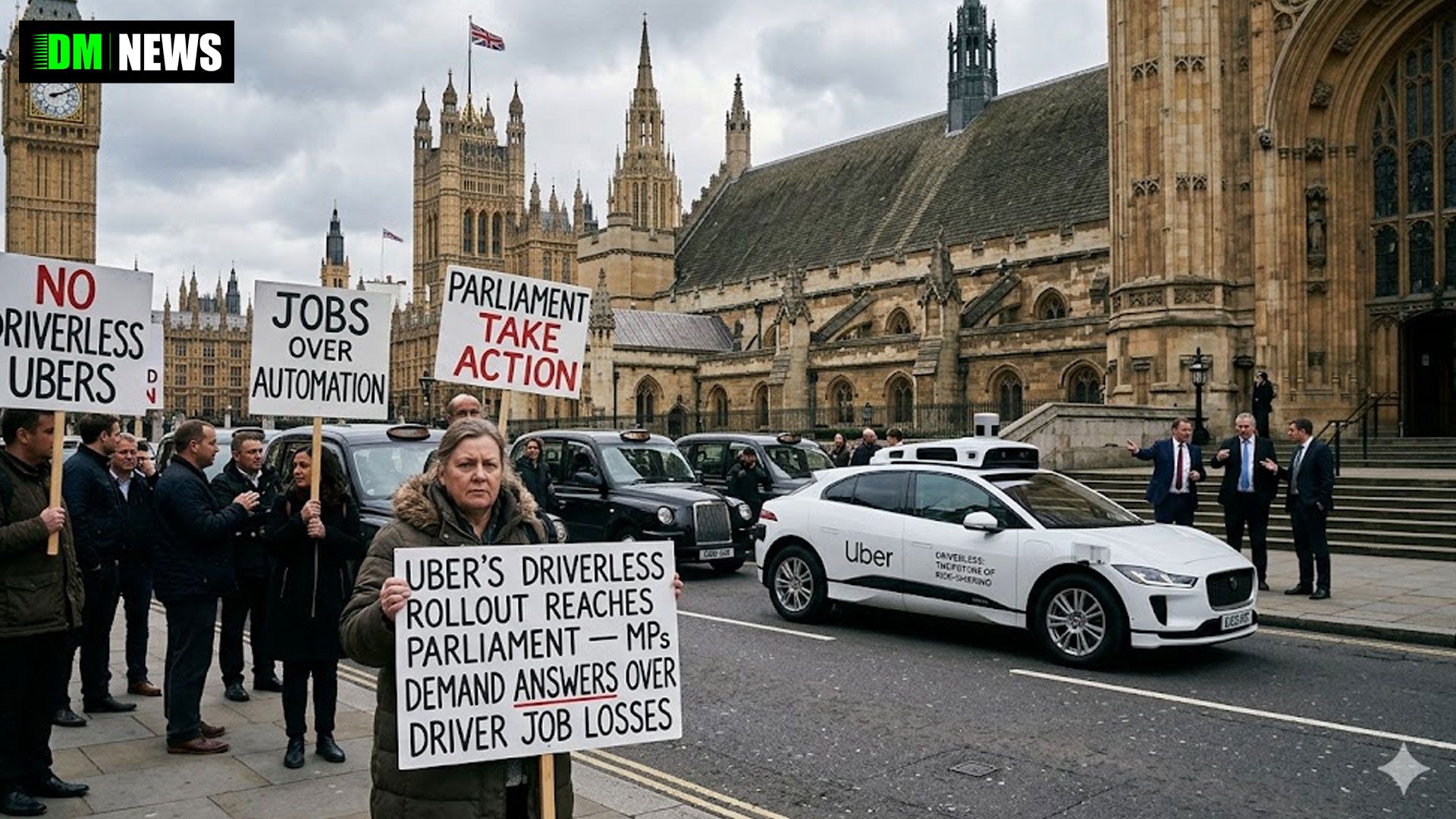
Uber’s plans to put driverless vehicles on UK roads later this year have landed squarely in the political spotlight, with MPs raising serious concerns in Parliament about what it could mean for the hundreds of thousands of private hire and taxi drivers whose livelihoods depend on being behind the wheel.
During a Business of the House session on 23 April, Clive Efford, MP for Eltham and Chislehurst, warned that Uber’s planned autonomous rollout — expected to begin in September, subject to government approval — is already causing anxiety amongst drivers who feel they are being completely shut out of the conversation. Efford drew a pointed comparison with one of the most controversial employment scandals in recent memory, saying there was “very little difference” between Uber’s approach and the actions of P&O Ferries, which sacked 800 workers without notice in 2022 and replaced them with cheaper agency staff. He called on the Department for Transport to make a formal statement and urged the government not to allow companies to replace workers without proper safeguards in place.

The government’s response was measured but not entirely reassuring. Alan Campbell, responding on behalf of ministers, acknowledged the concerns and said the government would expect companies to consult with their workforce during any such transition. He added that he would take the matter directly to ministers to “ensure that we are doing everything we can to get ahead of this particular game.” Whether that translates into meaningful protection for drivers remains to be seen.
The backdrop to all of this is the Automated Vehicles Act 2024, which created the legal framework for driverless vehicles to operate on UK roads and shifted liability in the event of an accident away from the passenger and onto the manufacturer. The government fast-tracked pilot schemes as part of that legislation, and from spring 2026, commercial firms have been permitted to run small-scale driverless taxi and bus services on English roads without a safety driver present. Uber has been vocal about its ambitions in this space, with its head of autonomous mobility welcoming the UK’s regulatory progress and confirming it had appointed a dedicated leader for its UK autonomous operations.
For drivers, the numbers are stark. A parliamentary petition calling for the government to block the autonomous rollout warns that driverless taxis could put over 300,000 private hire and black cab drivers out of work across the UK. Many of those drivers have already faced years of financial pressure from rising costs, platform commission structures and the impact of new VAT rules on ride-hailing fares.
What happens next is uncertain. The full Automated Vehicles Act isn’t due to come fully into force until the second half of 2027, which means the current pilot phase operates under a more limited framework. But September’s expected Uber rollout, if it proceeds, will be the first real test of how both the government and the industry handle the human cost of automation — and whether drivers get a proper seat at the table.
Thanks for visiting DM News! If you’ve got a question, a story tip, or anything you’d like to share, head over to DriverMatty.com — I love to hear from you. While you’re there, don’t forget to check out my other websites and social media channels.
Sources
Driverless Uber Rollout Sparks MPs Concern — TaxiPoint
MP Highlights Uber Drivers’ Autonomous Concerns — Highways News
Connected and Autonomous Vehicles — House of Commons Library
Driving Innovation — Self-Driving Pilots Fast-Tracked — GOV.UK