
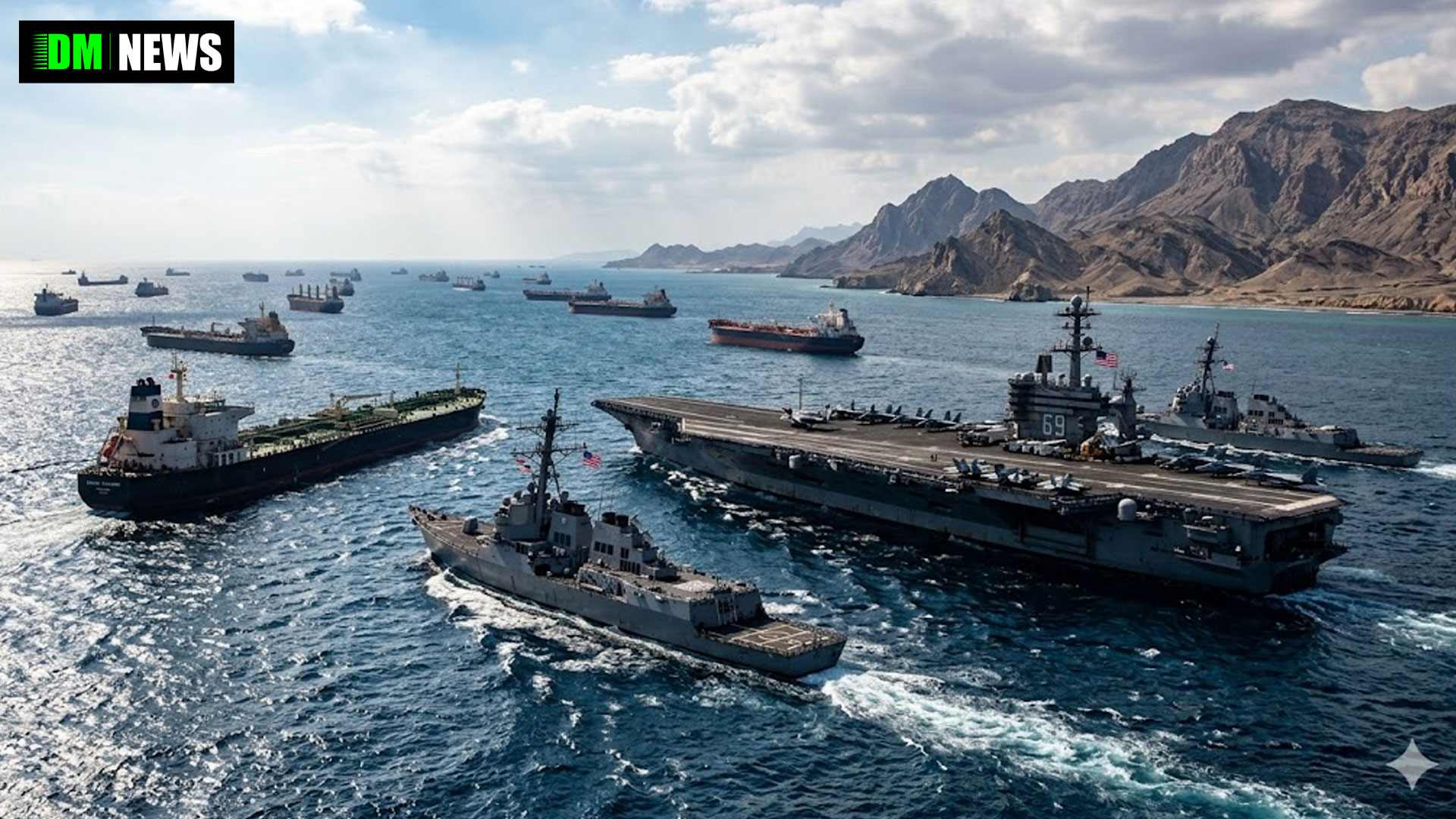
The global energy market has been rocked this morning as the US Navy prepares to enforce a blockade on the Strait of Hormuz. Following the collapse of high-stakes ceasefire talks in Islamabad over the weekend, President Donald Trump announced that the United States will interdict vessels entering or exiting Iranian ports.
While the US Central Command (CENTCOM) has clarified that they intend to maintain “freedom of navigation” for ships travelling to non-Iranian ports, the move has effectively brought traffic in the world’s most important energy corridor to a standstill. Reports indicate that tankers are already steering clear of the region to avoid being caught in the crossfire or facing “illegal toll” interdictions threatened by Washington.

Why the Strait of Hormuz Matters
The Strait of Hormuz is a narrow waterway between Oman and Iran that connects the Persian Gulf with the Gulf of Oman and the Arabian Sea. It is the world’s most important oil transit chokepoint.
- Energy Volume: Roughly 20% of the world’s total oil consumption passes through this strait daily.
- LNG Supplies: About 20% of global Liquefied Natural Gas (LNG), primarily from Qatar, relies on this route to reach international markets.
The Immediate Impact on the UK
Although the UK is not the primary destination for all Gulf oil, the British economy is deeply integrated into global energy pricing. The blockade has already triggered a sharp reaction in the UK:
- Fuel Prices: Brent Crude has surged past $100 per barrel, with some benchmarks hitting $104. This is expected to lead to another significant jump at British petrol pumps, where prices had already risen by up to 20% since the conflict began in February.
- Energy Bills: The UK relies on LNG imports for heating and electricity. With major suppliers like QatarEnergy facing logistical nightmares, household gas bills are forecast to rise later in 2026.
- Travel Disruptions: Airlines including Ryanair have warned of potential flight cancellations—up to 10% of summer schedules—due to jet fuel shortages. The UK is considered particularly vulnerable due to its reliance on Kuwaiti jet fuel markets.
- Inflation and Growth: The Bank of England has already raised inflation forecasts to between 3% and 3.5%. Leading economists have cut the UK’s GDP growth projections for 2026 to as low as 0.4%, citing the “energy-supply shock.”
What Happens Next?
The blockade is set to be enforced from 14:00 GMT today (Monday, 13 April). While the US claims it will only target Iranian-bound cargo, the reality is a “controlled clearance mechanism” that slows all transit to a crawl. Iran has responded with threats of “forceful response,” leaving the world watching to see if this diplomatic breakdown leads to a wider maritime conflict.
For the British public, the coming weeks likely mean higher costs at the supermarket and the petrol station as the “economic clock of war” continues to tick.
Thanks for visiting DM News! If you’ve got a question, a story tip, or anything you like to share, head over to DriverMatty.com — I love to hear from you. While you’re there, don’t forget to check out my other websites and social media channels.
Sources:
- PBS News: Trump says U.S. Navy will blockade Strait of Hormuz
- Times of India: US announces naval blockade on Iranian ports
- House of Commons Library: Economic update: Middle East conflict and the UK economy
- Time Magazine: The Strait of Hormuz Crisis and Global Energy Rationing
- Gulf News: US moves to blockade Iranian ports as traffic halts