
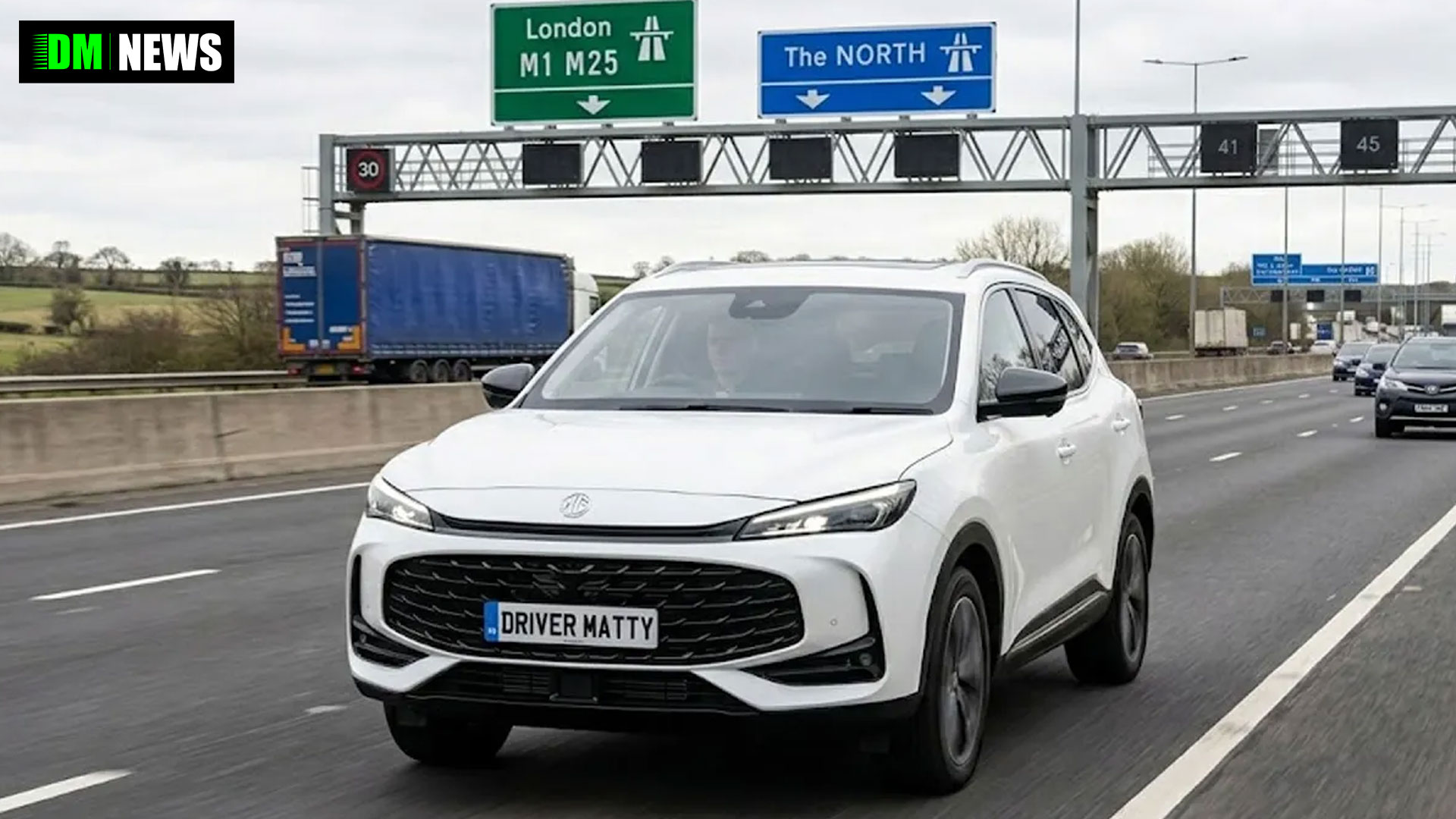
If you’ve been keeping an eye on the family SUV market lately, you’ll have noticed that the MG HS PHEV keeps coming up in conversation — and for good reason. Driver Matty recently took a white MG HS PHEV out for a proper motorway test to see how it holds up in the real world, covering everything from the way it drives to whether it actually saves you money at the pump. The short answer? It’s pretty impressive.
So What’s All the Fuss About?
The MG HS has come a long way from the slightly rough-around-the-edges model it once was. This second-generation car has had a serious glow-up — sharper looks, a much better interior, and powertrains that actually make sense for everyday driving. The PHEV version sits at the top of the range, and it’s the one most people are talking about.
Under the bonnet, it uses a 1.5-litre turbocharged petrol engine paired with a powerful electric motor, pushing combined output to around 295–307bhp depending on the source. That gives it a 0–60 time of around 6.1 seconds — which is genuinely quick for a family SUV in this price bracket, and noticeably faster than rivals like the BYD Seal U or the Jaecoo 7.
The Electric Range Is Where It Gets Really Interesting
The headline figure for the MG HS PHEV is a claimed 75 miles of pure electric range, thanks to its 24.7kWh battery. That’s a massive leap over a lot of the competition — rivals like the Ford Kuga, Hyundai Tucson and Kia Sportage PHEV officially manage only around 40 miles on electric. In real-world testing, the MG got impressively close to that official figure, which isn’t always the case with PHEVs.
If you’re doing a typical daily commute and plugging in overnight, there’s a very good chance you’ll barely touch the petrol engine at all during the week. When the battery does run flat and you’re relying on petrol, expect around 35–42mpg — perfectly respectable for a big SUV.
The CO2 figure is just 12g/km, which drops it into the 5% benefit-in-kind tax band. For company car drivers, that’s a genuinely big deal — it makes the MG HS PHEV an extremely attractive alternative to a fully electric car, particularly for those who need longer range flexibility.
Charging
The MG HS PHEV comes with a 6.6kW onboard charger, which means a full charge from a 7kW home wallbox takes around three to four hours — so you could be charged up overnight with no issues at all. There’s no rapid charging support, which is worth knowing if you were hoping to top up quickly at a motorway services, but for most owners charging at home this won’t be a problem.
Inside and Practicality
Step inside and you’re greeted with a pair of 12.3-inch screens — one for the instrument cluster and one for the infotainment — which give it a modern, premium feel without the premium price tag. Higher-spec Trophy models add heated leather seats, a 360-degree parking camera, and wireless charging as standard.
There’s a proper amount of room in the back for adults, and the boot offers 507 litres of space with the seats up — the same whether you go petrol or PHEV, which is a rarity in this class. Fold the rear seats down and you’re looking at up to 1,484 litres of load space.
One thing worth mentioning: visibility isn’t the best due to thick windscreen pillars, and a few reviewers have noted the infotainment interface can be a bit fiddly. But all models come with parking sensors and a reversing camera, so it’s manageable.
How Much Does It Cost?
The MG HS PHEV starts from around £31,495–£32,495 in SE trim, rising to around £34,995 for the top-spec Trophy. To put that in context, the equivalent Kia Sportage PHEV sits at over £40,000. The MG undercuts even the Citroën C5 Aircross PHEV by nearly £4,000. For what you get, the value really is hard to argue with.
It also comes with a seven-year, 100,000-mile warranty, which does a lot to ease any concerns about buying a Chinese-brand vehicle.
Is It Worth It?
For a lot of drivers — families, commuters, and especially company car users — the MG HS PHEV is a genuinely compelling package. It’s not the most exciting thing to drive on a twisty B-road, and the steering feedback is minimal, but on the motorway and in everyday use it’s smooth, refined, and economical. The 75-mile electric range is the real selling point, and in the real world it delivers.
Thanks for visiting DM News! If you’ve got a question, a story tip, or anything you’d like to share, head over to DriverMatty.com — I love to hear from you. While you’re there, don’t forget to check out my other websites and social media channels.
Sources