
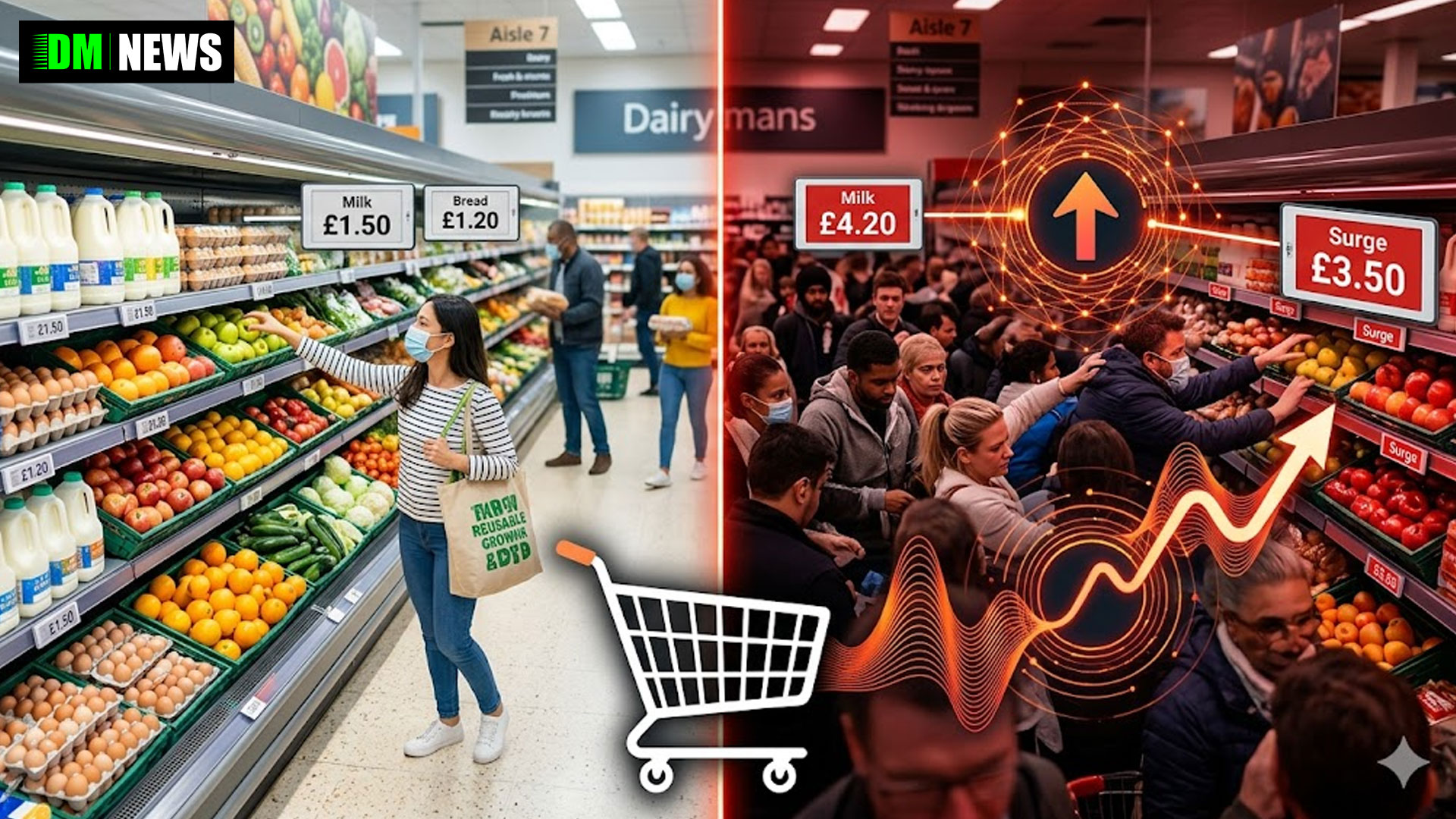
The weekly food shop could be about to get a lot more unpredictable as the Bank of England warns that “dynamic pricing” is eyeing a move into UK supermarkets. Following the rise of surge pricing in industries like ride-hailing and concert tickets, major British retailers are reportedly exploring technology that could see the price of a pint of milk or a loaf of bread fluctuate depending on the time of day or even the weather.
The shift is being made possible by the rapid rollout of Electronic Shelf Labels (ESLs). These digital screens replace traditional paper price tags and allow supermarkets to update prices across thousands of products instantly via a central computer system.

How Surge Pricing Could Affect Your Bill
According to recent insights from the Bank of England’s deputy governor, Clare Lombardelli, the reduction in “menu costs”—the physical expense of changing price tags—means retailers can now respond to market conditions in real time.
- Peak-Hour Spikes: Prices could theoretically rise during the “after-work rush” between 5:00 PM and 7:00 PM, when demand is highest.
- Weather-Driven Demand: If a heatwave is forecast, the cost of bottled water, burgers, and ice cream could jump instantly to match the surge in interest.
- Personalised Pricing: Using data from loyalty cards, some experts warn that supermarkets could eventually offer different prices to different customers based on their shopping habits.
Which Stores are Leading the Digital Rollout?
While many chains insist they are currently using the technology to lower prices for clearance items or loyalty deals, the infrastructure for surge pricing is being installed nationwide:
| Supermarket | Digital Label Status (2026) |
| Co-op | Digital tags in over 700 branches; 2,300 outlets planned by end of year. |
| Morrisons | Electronic labels rolled out across nearly all 497 supermarkets. |
| Asda | Equipping hundreds of “Express” stores with digital tags. |
| Aldi / Lidl | Major investments in ESLs to streamline stock management and efficiency. |
The Backlash: “Exploitative” or Efficient?
The proposals have already sparked a political firestorm. The SNP and Scottish Greens have branded the potential move as “exploitative,” arguing that it turns a basic human right—access to food—into a source of anxiety.
Critics argue that unlike a non-essential Uber ride or a Taylor Swift ticket, food is a necessity, and price volatility could hit the lowest-income households the hardest. Conversely, some economists suggest that if used correctly, dynamic pricing could help reduce food waste by automatically lowering prices on items nearing their expiry date.
For now, the British Retail Consortium says there is no official industry-wide policy on surge pricing, but with the technology already on the shelves, the “quiet revolution” of the digital price tag is well underway.
Thanks for visiting DM News! If you’ve got a question, a story tip, or anything you like to share, head over to DriverMatty.com — I love to hear from you. While you’re there, don’t forget to check out my other websites and social media channels.
Sources:
- The National: What is dynamic pricing as UK supermarkets eye controversial move?
- Asian Trader: Surge pricing could be coming to supermarkets, Bank of England warns
- EasternEye: 5 ways dynamic pricing could change your supermarket bill
- Technology Magazine: Is Digitalisation Making Supermarkets More Expensive?
- Tax Research UK: Dynamic pricing: the technology that could deliver harm to the UK