
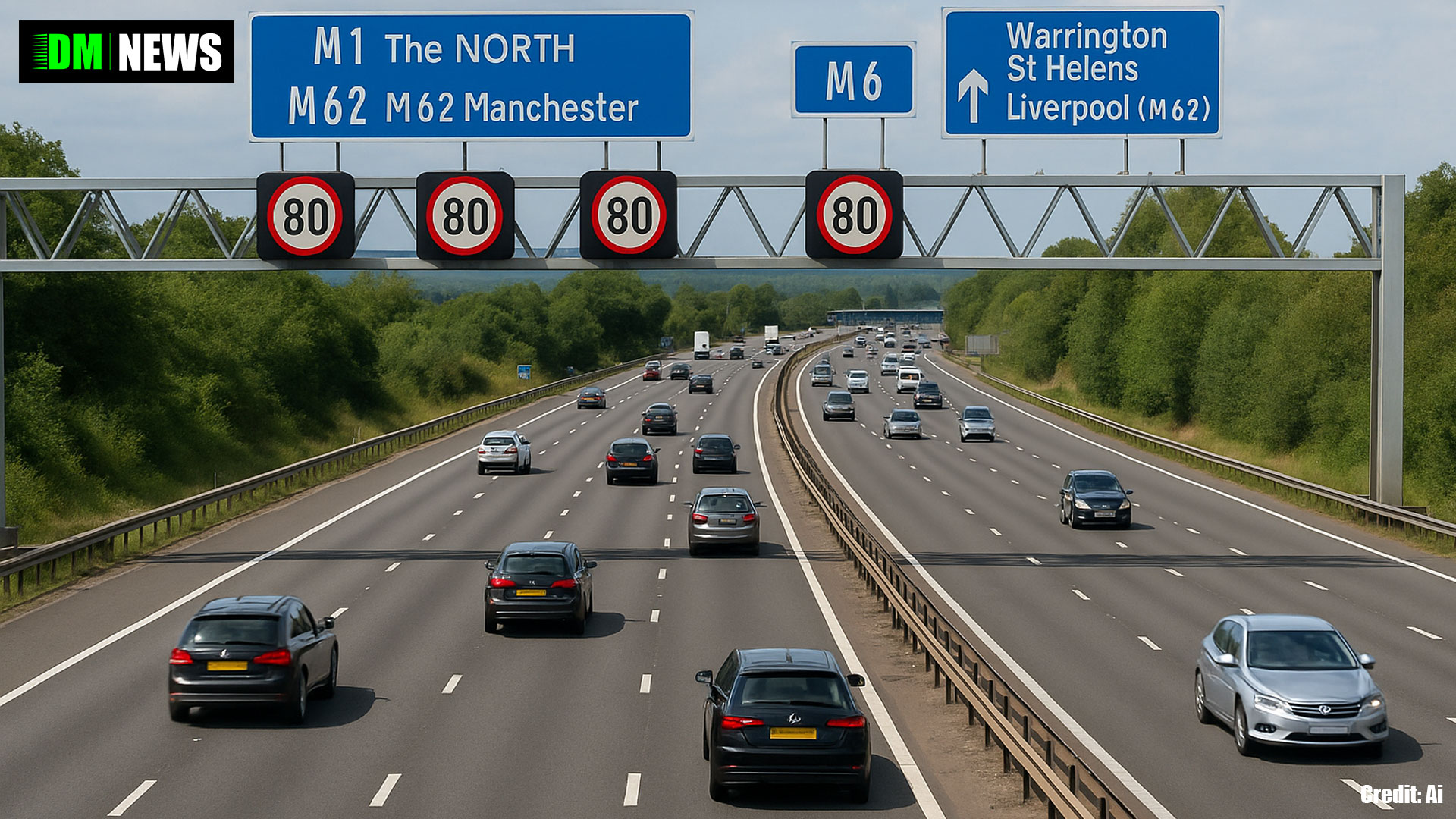
A new survey has revealed that a majority of UK motorists believe the national motorway speed limit should be increased from 70mph to 80mph — reigniting debate over whether current restrictions are outdated for modern vehicles.
According to a recent poll cited by Group 1 Automotive, most drivers surveyed felt the existing 70mph limit — introduced back in 1965 — no longer reflects today’s safer vehicle technology and improved motorway infrastructure.
Supporters of the change argue that cars now have advanced driver-assistance systems, better braking, and enhanced crash protection, meaning the UK could safely match motorway speeds seen in parts of Europe.
However, safety experts have urged caution. The Road Safety Foundation warned that many motorways still lack sufficient barriers and run-off areas to handle higher-speed collisions. They said raising the limit could increase both the likelihood and severity of crashes.
Environmental campaigners have also voiced concern that higher limits could increase CO₂ emissions and fuel consumption. Research referenced by Insurance Factory found that even a modest 10mph increase can lead to noticeably higher fuel use per mile.
The idea of an 80mph motorway limit is not new — the Department for Transport first floated the concept in 2011, though the plan was later shelved amid environmental and safety objections.
What it could mean for taxi and private hire drivers
If implemented, a higher motorway limit could slightly shorten journey times for professional drivers — particularly those covering long-distance airport transfers or intercity work.
However, taxi and private-hire drivers would also need to consider:
- Fuel and cost impact – higher speeds mean higher consumption, cutting into profit margins.
- Vehicle wear and tear – faster cruising speeds can increase engine strain and tyre wear.
- Insurance and safety – insurers may reassess risk profiles for high-mileage drivers if the limit changes.
For now, the 70mph rule remains in place, but growing public support could push the Government to revisit the discussion — especially as the UK seeks to modernise transport regulations post-COVID and amid the EV transition.

DM News Commentary
Modern vehicles are built for far more than the outdated 70 mph motorway limit introduced over half a century ago. Today’s cars come equipped with advanced braking systems, lane-assist technology, adaptive cruise control and far stronger crash protection — making sustained speeds of 80 mph both achievable and safe when driven responsibly.
The 70 mph rule was created in an era of carburettors, drum brakes and basic seatbelts — a completely different motoring world. For taxi and private-hire drivers using newer, well-maintained vehicles, it’s clear that modern engineering can comfortably handle higher speeds without compromising safety.
With so much progress in vehicle design, it’s understandable why many now see the 70 mph limit as a regulation that hasn’t kept pace with reality on the road.
Thanks for visiting DM News!
If you’ve got a question, story, or anything you’d like to say, head over to DriverMatty.com — I’d love to hear from you! And while you’re there, don’t forget to check out my other websites and social media channels.