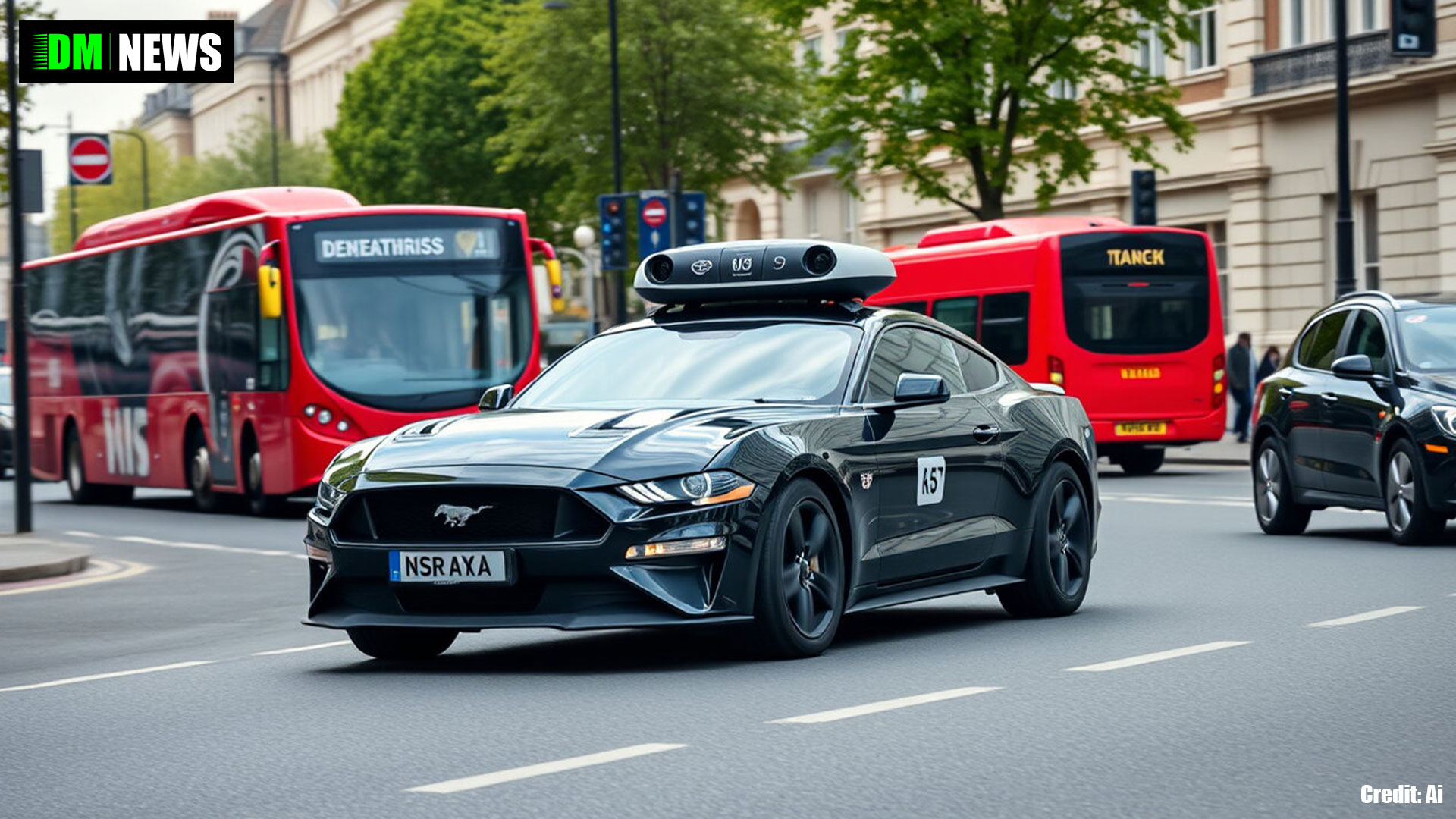
According to Autocar, a Wayve-equipped Ford Mustang Mach-E completed a supervised autonomous test drive in North London, with the safety driver hands-off for much of the route and the AI handling tricky manoeuvres such as a right turn into heavy traffic.
DM News Commentary
This demonstration may look like the future arriving, but it’s important to keep the wider context in focus — especially for taxi and private-hire drivers.
A step forward, but nowhere near a commercial UK robotaxi
Despite the excitement, this was not a fully driverless service. A human sat ready to take over at all times. UK regulators are nowhere close to approving a true Level-4 robotaxi for public use, and the insurance and liability questions alone would take years to resolve.
A clever test — but London is a different beast
Handling a single test route is impressive, but running thousands of journeys a week, in all weather, with unpredictable road users, emergency diversions, cyclists, and pedestrians, is a different challenge entirely. London’s road network is dynamic and chaotic — exactly the kind of environment where AVs still struggle.
Human drivers still outperform AI in real-world taxi conditions
Autonomous systems can handle structured motorway driving, but the daily reality for UK PHV drivers includes:
- road closures
- Uber/Bolt/Veezu pick-up complications
- passengers needing help with luggage
- meet-and-greet jobs at airports
- diversions around events, strikes or football matches
An autonomous taxi can’t adapt socially, help a vulnerable passenger, or manage unexpected real-world issues the way a human can.

Cost will be a huge barrier
Even if the sensors are cheaper than previous AV systems, the total operating cost of a driverless fleet (remote supervision, safety certification, software updates, insurance) is currently far higher than paying a human driver.
Impact on UK taxis? Not yet
For UK PHV and taxi operators, this is interesting — but not threatening.
Realistically:
- driver roles are safe for many years
- AV rollout will be slow, heavily regulated, and tightly restricted
- early deployments will likely be small, geofenced, and monitored
For now, it’s technology in development — not a replacement for the workforce.
Thanks for visiting DM News! If you’ve got a question, story, or anything you’d like to say, head over to DriverMatty.com — I’d love to hear from you! And while you’re there, don’t forget to check out my other websites and social media channels.