It’s one of the most searched questions among anyone thinking about driving for Uber in the UK: how much will I actually take home? The problem is that most answers you find online are built around the best-case scenario — peak surge pricing, a full week of hours, no nasty surprises. The reality for most drivers is quite different.
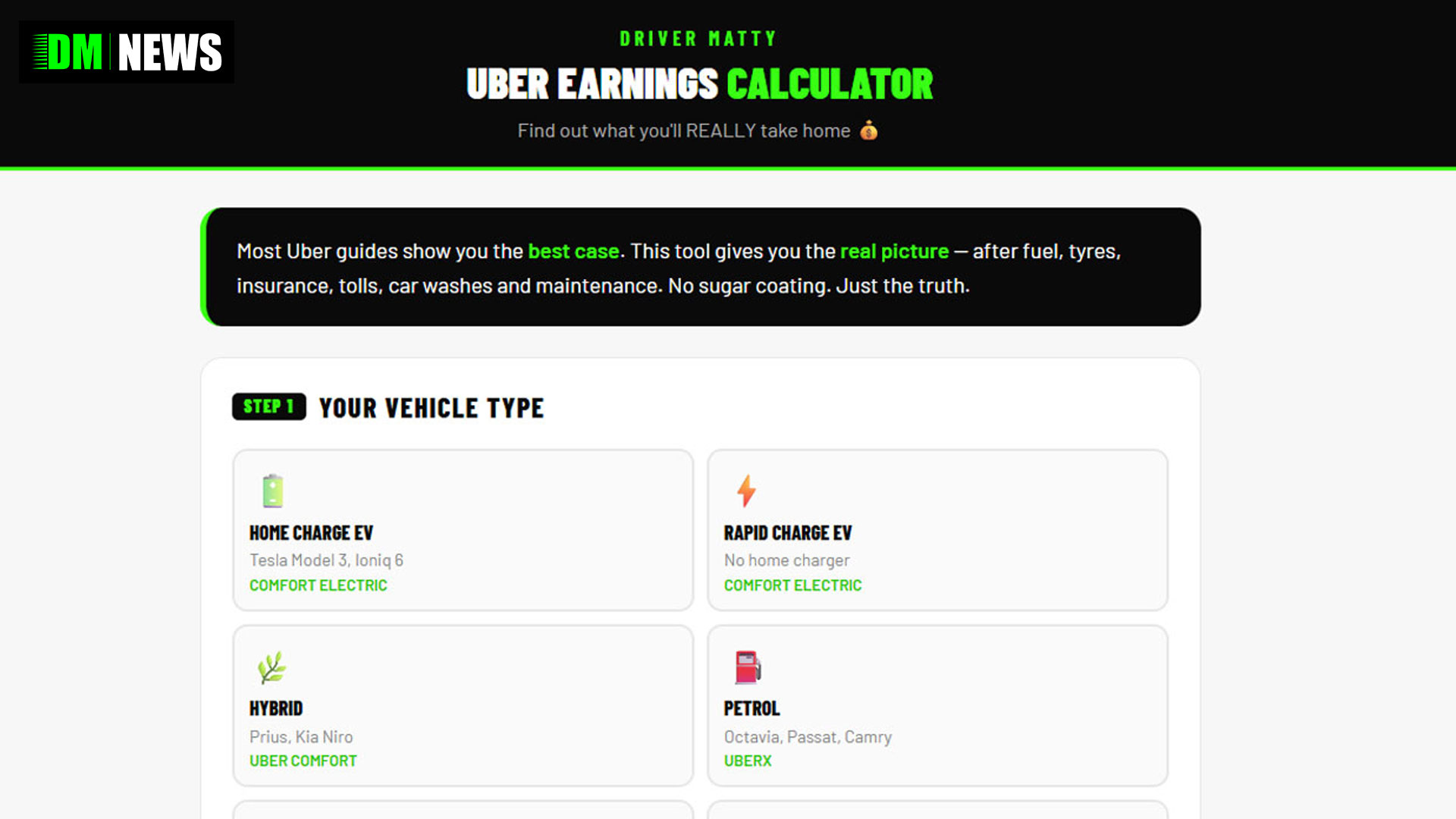
That’s exactly why Driver Matty has built a free Uber Earnings Calculator — and it’s one of the most honest tools out there for UK drivers thinking about getting behind the wheel.
The Gap Between Gross and Net Is Bigger Than You Think
Before getting into the calculator itself, it’s worth being straight about the numbers. UK Uber drivers typically earn between £15 and £22 per hour gross depending on location and shift pattern. After Uber takes its service fee — typically around 25% — and once you factor in fuel, insurance, vehicle maintenance, and depreciation, most drivers net somewhere between £11 and £15 per hour. In London, gross hourly figures can reach £25 during busy periods, but the capital also brings its own added costs: the Congestion Charge, ULEZ fees, Dartford Crossing, and stiff competition in quieter zones.
A full-time driver working 40 to 50 hours a week might gross between £2,600 and £3,800 per month. But driver communities consistently report that take-home pay sits at roughly 60 to 70 per cent of gross once all costs are included. That’s a meaningful chunk of earnings quietly disappearing — and it’s exactly what most Uber income guides gloss over.
What Makes Driver Matty’s Calculator Different
The free tool at DriverMatty.com is built around the real picture, not the brochure version. You start by selecting your vehicle type — from a home-charged EV like a Tesla Model 3 through to a premium MPV like a V-Class — because fuel and running costs vary enormously depending on what you’re driving. A driver running a Prius hybrid in Manchester has a very different cost profile to someone running a diesel Passat in London.
From there, you input how you have the car — whether you’re renting weekly, on finance or PCP, or own it outright. Each has a different cost structure. Renters avoid maintenance bills but carry the highest weekly outgoing. Those who own outright save on payments but should still be accounting for depreciation, even if it doesn’t feel like a real cost month to month.
Then comes city, shift pattern, hours per day, and days per week. The shift pattern section is particularly useful — you can select from Morning Rush, Evening Rush, Nights and Weekends, Early Hours for airport runs, and several others. The timing of your work makes an enormous difference to earnings, with Friday and Saturday nights typically offering the highest surge potential of the week.
Extra costs round out the picture: Congestion Charge, bridge and tunnel tolls, regular car washing, and VAT registration if your turnover is heading towards the threshold. The calculator then spits out your gross per hour, net per hour, and estimated weekly, monthly, and annual take-home figures.
The Tax Bit Most Drivers Forget
As the calculator itself flags, Uber drivers in the UK are self-employed. That means income tax and National Insurance are your responsibility via self-assessment. A common rule of thumb is to set aside 20 to 25 per cent of your earnings from the start — not doing so is one of the most common financial mistakes new drivers make. If your turnover is climbing towards the VAT registration threshold, speaking to an accountant who specialises in gig economy drivers is well worth the cost.
Is Uber Driving Worth It in 2026?
That depends entirely on your circumstances, which is rather the point of the calculator. For someone with a home-charged EV, working peak evening and weekend shifts in a busy city, the numbers can stack up well. For someone running a petrol car in a quieter city during daytime hours, the margins are much tighter.
The flexibility remains one of the biggest draws. You set your own hours, there are no fixed shifts, and Uber pays holiday pay automatically at 12.07 per cent of earnings. For drivers who approach it strategically — working the peaks, keeping costs tight, and planning their shifts around demand — it can be a solid earner. For those who don’t, the gap between the headline figure and actual take-home can be a rude awakening.
The calculator won’t tell you what to do. But it will show you the truth, which is more than most guides will.
You can use it for free at DriverMatty.com.
Thanks for visiting DM News! If you’ve got a question, a story tip, or anything you’d like to share, head over to DriverMatty.com — I love to hear from you. While you’re there, don’t forget to check out my other websites and social media channels.
Sources
- Driver Matty — Uber Earnings Calculator UK 2026
- Zego — How much do Uber drivers make in the UK? 2026 guide
- SimplyQuote — How Much Do Uber Drivers Make In The UK?
- Rapid PCO — How Much Do Uber Drivers Earn? A Complete UK Guide
- Zego — Driving for Uber Part-Time as a Side Hustle
- Ayan — How Much Do Uber Drivers Really Make in London? 2026 Earnings Breakdown