
Electric HGVs have long been seen as the future of haulage — but new real-world results suggest that future has already arrived.
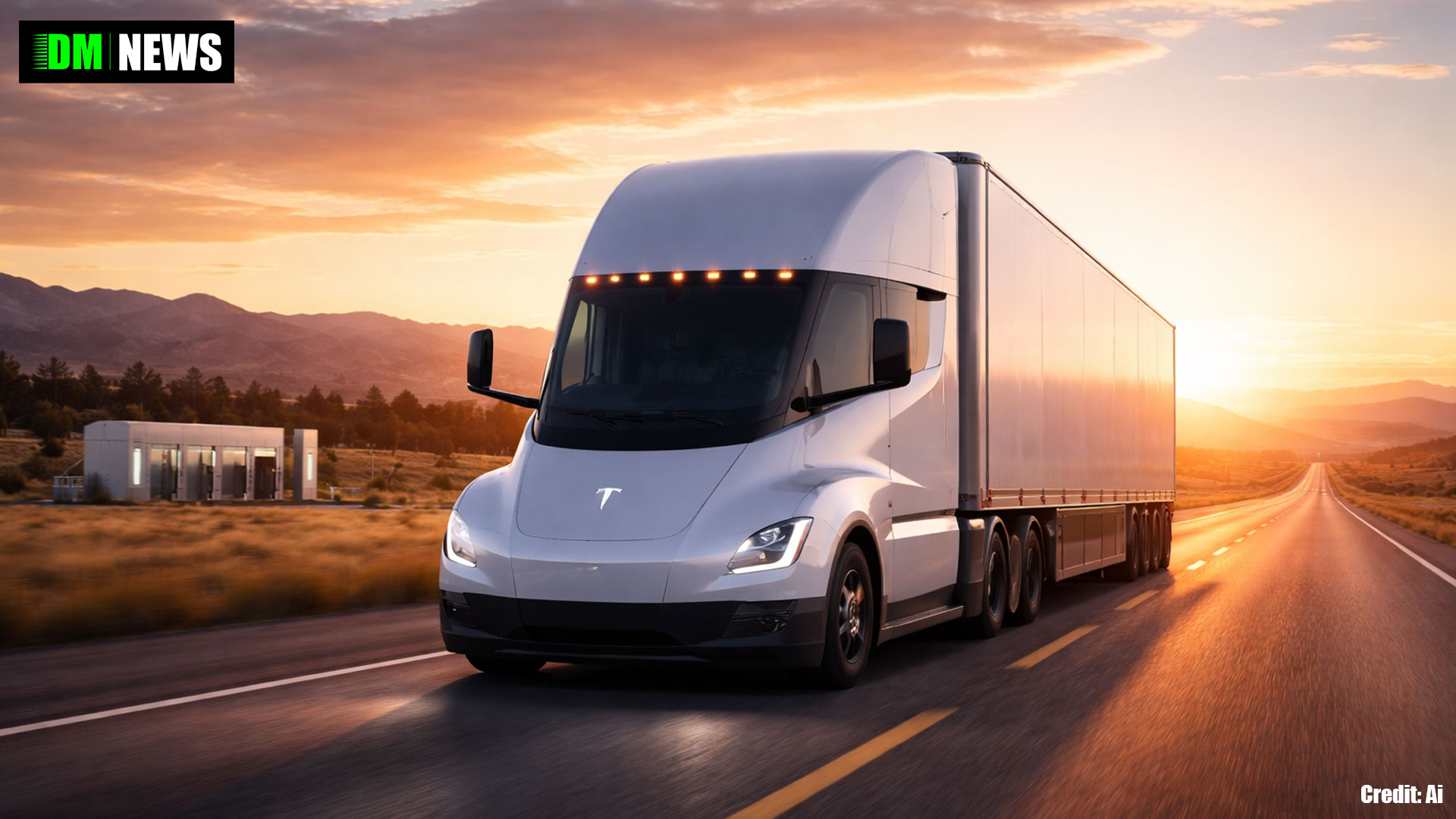
Recent testing involving the Tesla Semi, operated by Saia and monitored by the North American Council for Freight Efficiency (NACFE), has delivered some of the strongest real-world performance data we’ve seen to date for an all-electric truck.
According to the findings, one Tesla Semi unit averaged 456 miles per day during testing, with a peak range of 585 miles on a single run between Stockton and Bakersfield in California. That kind of range begins to rival — and in some cases match — traditional diesel HGV operations on certain routes.

The test wasn’t just about range either. The vehicle was pushed through demanding operational conditions, including dual-shift usage. During its longest recorded run of 445 miles, the truck operated at a 91% battery depth of discharge — showing that the vehicle is capable of intensive use throughout a full working day.
Charging performance also played a key role in the results. Using Tesla’s Megacharger network, capable of delivering up to 750 kW, the Semi was able to recharge from 20% to 80% in around 45 minutes. That kind of turnaround time is critical for logistics operators, where downtime directly impacts profitability.
NACFE described the performance as “knocking it out of the park,” highlighting just how far electric HGV technology has progressed in a relatively short period of time.
For years, one of the biggest concerns around electric trucks has been whether they could handle long-distance, high-demand routes without compromising efficiency or requiring excessive downtime. These results suggest that, at least in the right conditions and with the right infrastructure, those barriers are quickly being overcome.
DM News Commentary
This is a big moment for the wider transport industry.
We’ve already seen electric cars prove themselves over high mileage — and now the same is starting to happen with HGVs.
The key takeaway here isn’t just the headline 585-mile range — it’s the fact that the truck handled real working conditions, dual shifts, and rapid charging without major issues. That’s what operators care about.
That said, infrastructure will be the real deciding factor in the UK. Megachargers at this scale aren’t widely available yet, and without that, the full potential of electric HGVs can’t be realised.
But make no mistake — this isn’t early testing anymore. This is real-world performance, and it shows the industry is moving faster than many expected.
Thanks for visiting DM News! If you’ve got a question, a story tip, or anything you’d like to share, head over to DriverMatty.com — I’d love to hear from you.
While you’re there, don’t forget to check out my other websites and social media channels.