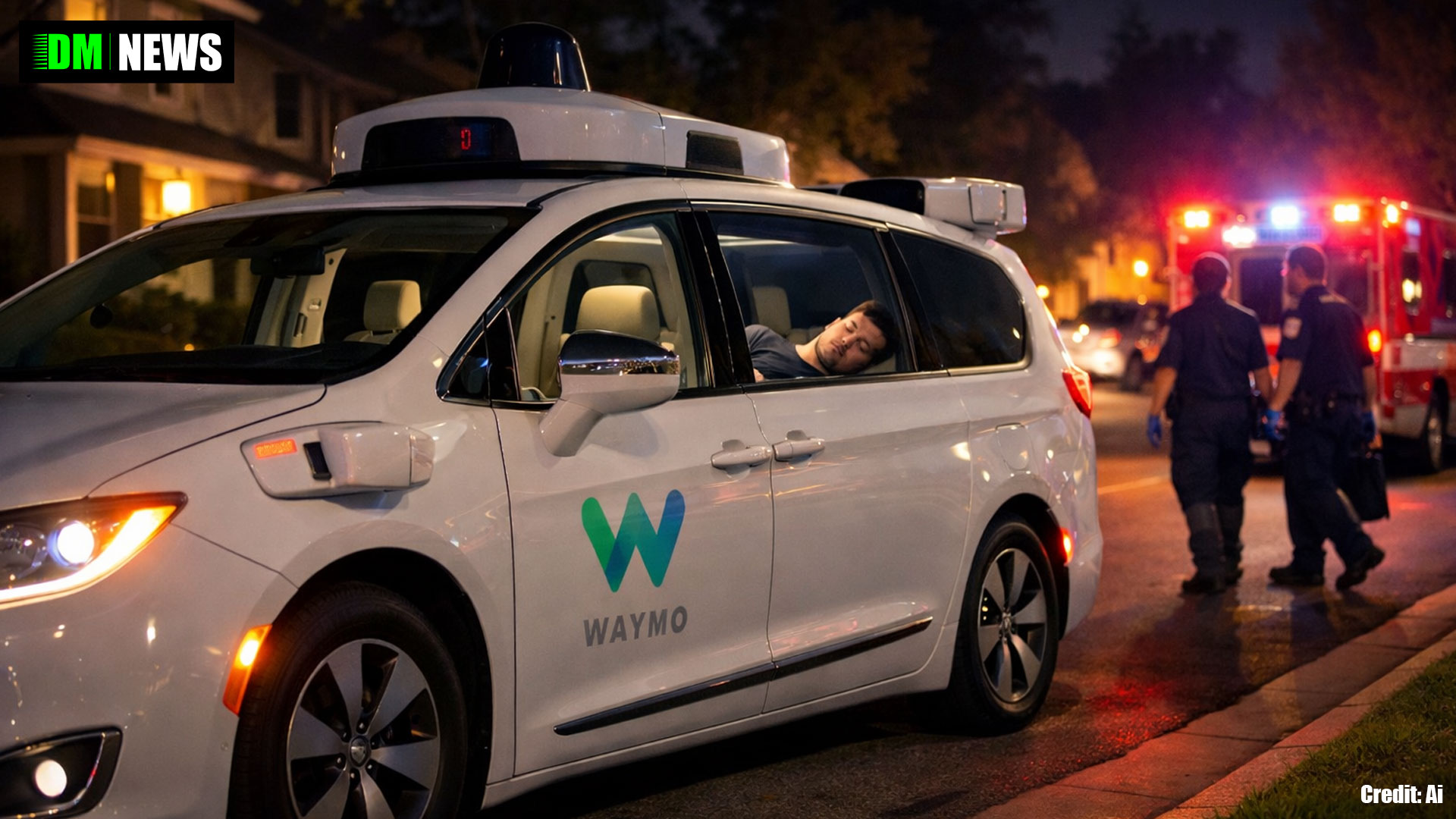
Waymo has come under fresh scrutiny after a viral TikTok video appeared to show a passenger passed out and unresponsive in the back of one of its fully driverless taxis.
The short clip, which has been widely shared on TikTok, shows a man slumped in the rear seat of a Waymo vehicle, seemingly asleep and failing to respond to repeated attempts to wake him. Those filming the incident appear unable to access the vehicle, highlighting the lack of a human driver or obvious way for bystanders to intervene. Towards the end of the video, paramedics are seen arriving at the scene.
At the time of writing, it is unclear whether the passenger was simply asleep, intoxicated, or experiencing a medical emergency. No official statement has been issued confirming the individual’s condition, and there is no suggestion that the passenger came to harm. The video has, however, sparked widespread debate online about safety and accountability in fully autonomous transport.
The incident follows a growing number of viral clips involving driverless taxis behaving unexpectedly in real-world scenarios, reigniting concerns about how these vehicles deal with situations that would normally rely on human judgment.

DM News Commentary
This video raises an uncomfortable but very realistic question for the future of driverless taxis.
Imagine this scenario: you’ve had a night out, you book a driverless taxi to get home safely, and you fall fast asleep in the back seat. The vehicle completes the journey, pulls up outside your house… and you don’t wake up.
There’s no driver to shake your shoulder gently. No one to check if you’re okay. No one to make a judgment call about whether you’re drunk, exhausted, or genuinely unwell.
What happens next?
- Does the vehicle sit there indefinitely?
- Does it alert a remote operator?
- At what point are emergency services called?
- And who is responsible if something goes wrong?
For traditional taxi and private hire drivers, situations like this are part of the job. Drivers routinely wake sleeping passengers, make welfare checks, and even contact family members or emergency services when something doesn’t feel right. It’s a human safety net that currently cannot be replicated by software alone.
For the UK taxi and private hire trade, this is another example of why driverless vehicles are not a simple replacement for professional drivers — especially when it comes to passenger welfare, intoxication, vulnerability, and safeguarding.
Technology may be advancing rapidly, but real life is messy, unpredictable, and often requires human instinct — not just sensors and algorithms.
Thanks for visiting DM News! If you’ve got a question, story, or anything you’d like to say, head over to DriverMatty.com — I’d love to hear from you! And while you’re there, don’t forget to check out my other websites and social media channels.