
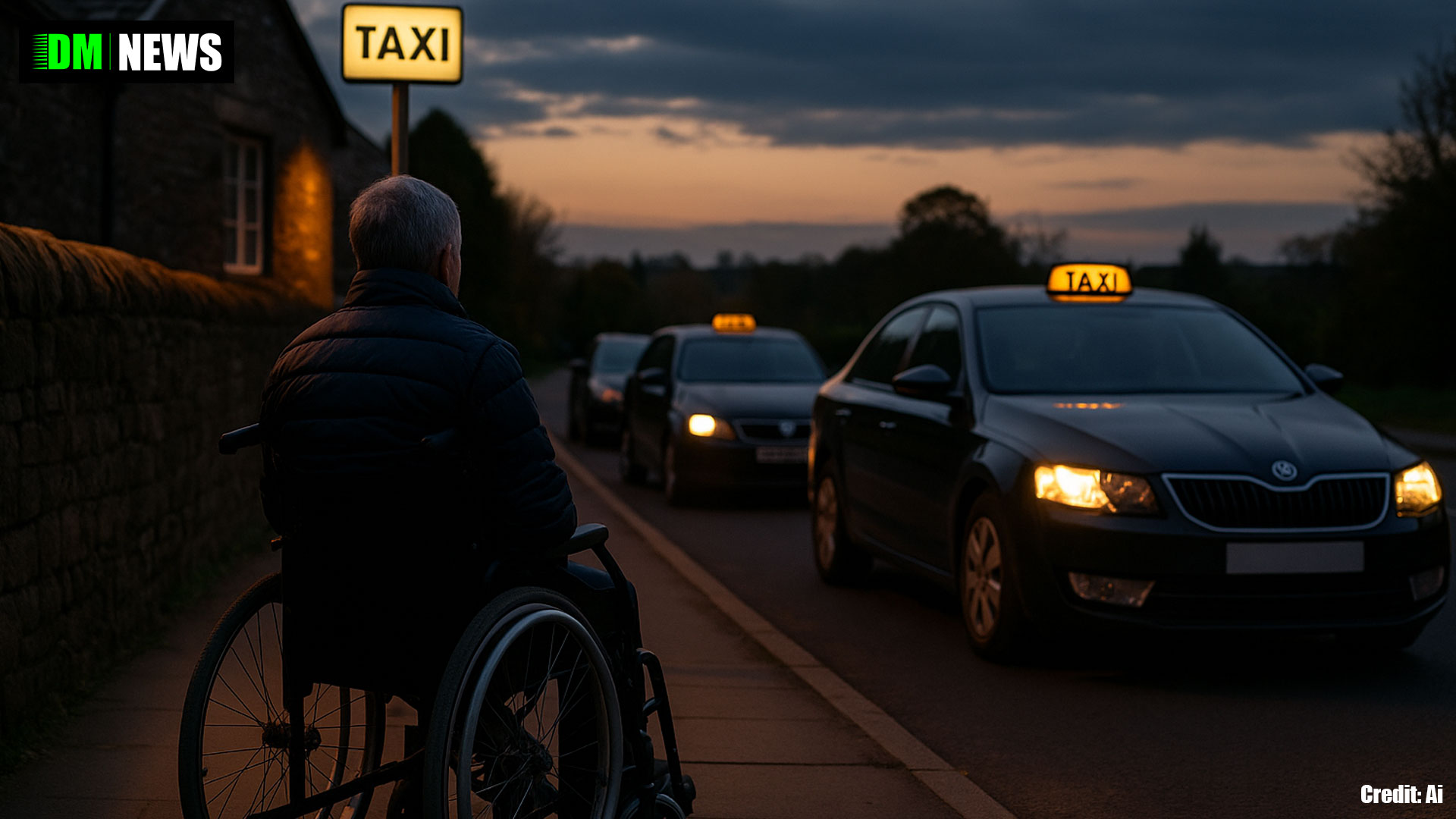
A leading disability charity has warned that a growing lack of wheelchair-accessible taxis in North Yorkshire is leaving many disabled residents stranded, unable to attend vital appointments or take part in daily life.
According to a report by BBC News, Disability Action Yorkshire said that while 144 more saloon taxis had entered service across the county since 2023, none were wheelchair-accessible. The charity described accessible transport as a “fundamental right and a cornerstone of independent living” and urged North Yorkshire Council to take urgent action.
Ian Lawson, chair of the North Yorkshire Disability Forum, told the BBC that campaigners have been calling for more wheelchair-accessible vehicles (WAVs) “since the turn of the century.” He said:
“Wheelchair users without their own vehicle find themselves unable to get to hospital or dental appointments and it leads to social isolation in rural North Yorkshire.”
Lawson, who lives with motor neurone disease, said he recently missed a hospital appointment after waiting three hours for an accessible taxi — an experience he described as “fairly common.”
The charity is calling on York and North Yorkshire Mayor David Skaith to prioritise accessibility in the region’s forthcoming Strategic and Local Transport Plan. A spokesperson for the mayor said taxis were “a vital part of the public transport infrastructure” and added:
“If our public transport network doesn’t serve everyone equally, it serves none of us properly.”

DM News Commentary
The situation in North Yorkshire highlights an ongoing national problem — the widening gap between mixed taxi fleets and fully wheelchair-accessible policies.
Some councils, such as Liverpool City Council, have long required all hackney vehicles to be wheelchair-accessible. This ensures that disabled passengers can always find a suitable cab, regardless of demand.
However, in areas with a mixed fleet policy, like North Yorkshire, most drivers understandably opt for cheaper, easier-to-maintain saloon cars rather than WAVs. While this benefits drivers financially, it leaves passengers who rely on wheelchair access with fewer transport options — especially in rural areas where public transport is limited.
For the disabled community, this isn’t just an inconvenience — it’s a question of independence, equality, and basic accessibility. Unless councils set minimum WAV quotas or offer better incentives for drivers to operate accessible vehicles, campaigners fear the problem will only worsen.
Thanks for visiting DM News!
If you’ve got a question, story, or anything you’d like to say, head over to DriverMatty.com — I’d love to hear from you! And while you’re there, don’t forget to check out my other websites and social media channels.