
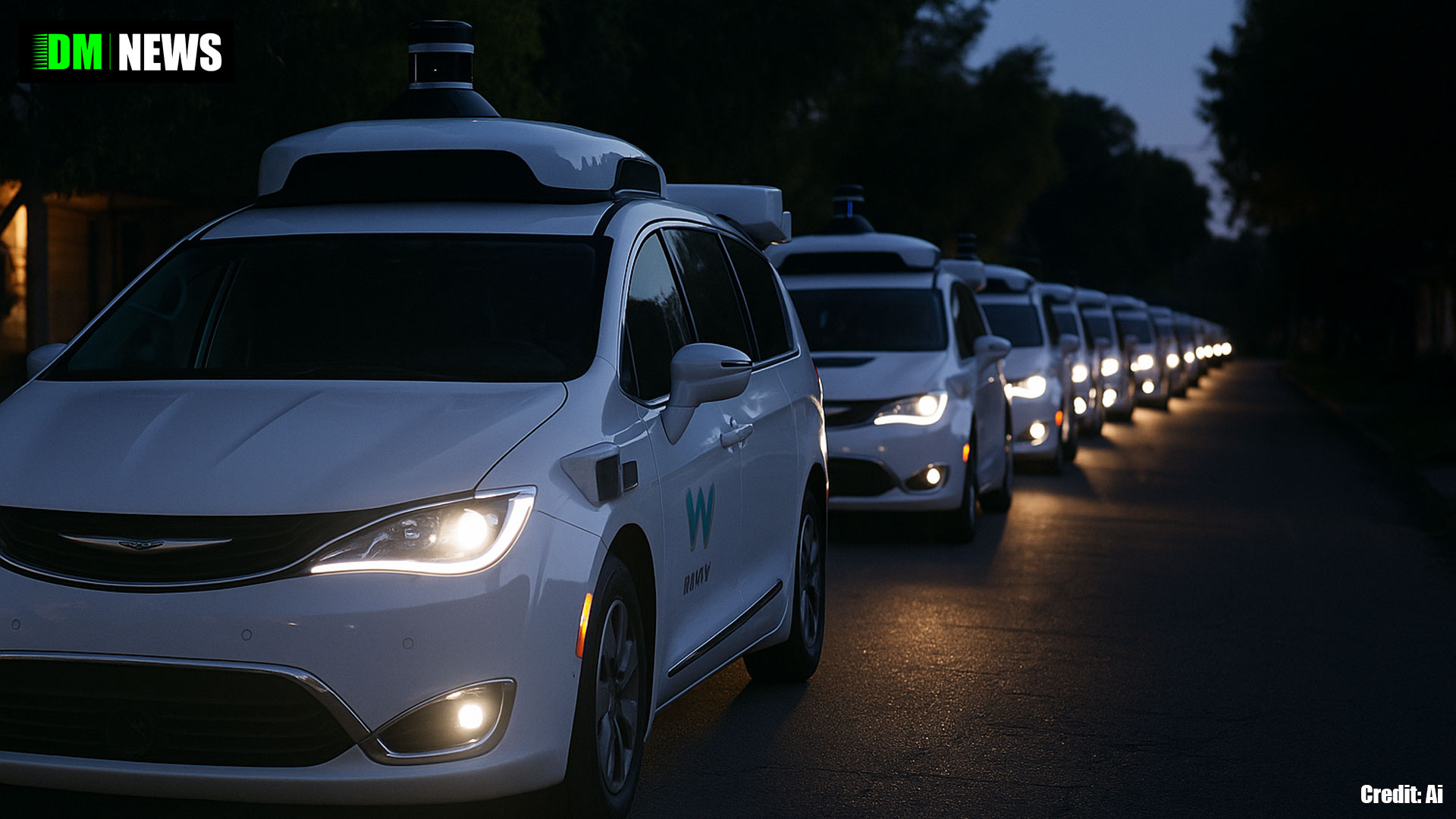
A tech prankster in San Francisco has caused chaos for Google’s self-driving car company Waymo after summoning 50 driverless taxis to the same dead-end street at once, in what he jokingly called the “world’s first Waymo DDOS”.
The Prank That Blocked a Street
The stunt saw dozens of Waymo robotaxis arriving simultaneously on one quiet residential street. None of the booked passengers actually showed up, leaving the vehicles idling in confusion before they eventually drove away about ten minutes later.
Each fake booking triggered a $5 no-show fee — meaning around $250 in lost rides. Waymo temporarily disabled pick-ups and drop-offs in the area until the following morning to prevent further disruption.
The prank was reportedly coordinated by a digital content creator named Riley Walz, who described it as a “distributed denial-of-service attack, but for cars”. The incident quickly went viral online, sparking debate about whether it was clever social commentary or irresponsible interference.
What the Incident Reveals About Robotaxi Weaknesses
While no damage or injuries occurred, the prank highlighted a potential flaw in autonomous ride systems — their vulnerability to mass misuse by human users. It also exposed key questions about:
- System resilience: Can driverless fleets handle sudden spikes in demand or coordinated pranks?
- Abuse prevention: How should companies penalise fake bookings without harming genuine users?
- Public trust: Events like this can undermine confidence in self-driving technology.
Waymo has faced similar PR challenges before — including incidents where driverless cars have become stuck in traffic, entered construction zones, or been vandalised by members of the public.
Lessons for the UK’s Autonomous Taxi Future
Although this latest stunt took place in California, it offers lessons for the UK’s developing autonomous transport plans under the Automated Vehicles Act 2024.
Operators will need to ensure their booking systems are secure and able to detect misuse, while regulators will have to set clear boundaries around user behaviour and data protection.
Public trust remains the biggest hurdle. For driverless taxis to succeed in the UK, they must prove not only their road safety but also their resilience to human mischief — whether accidental or deliberate.
Thanks for visiting DM News!
If you’ve got a question, story, or anything you’d like to say, head over to DriverMatty.com — I’d love to hear from you! And while you’re there, don’t forget to check out my other websites and social media channels.
Sources:





One Comment
Comments are closed.