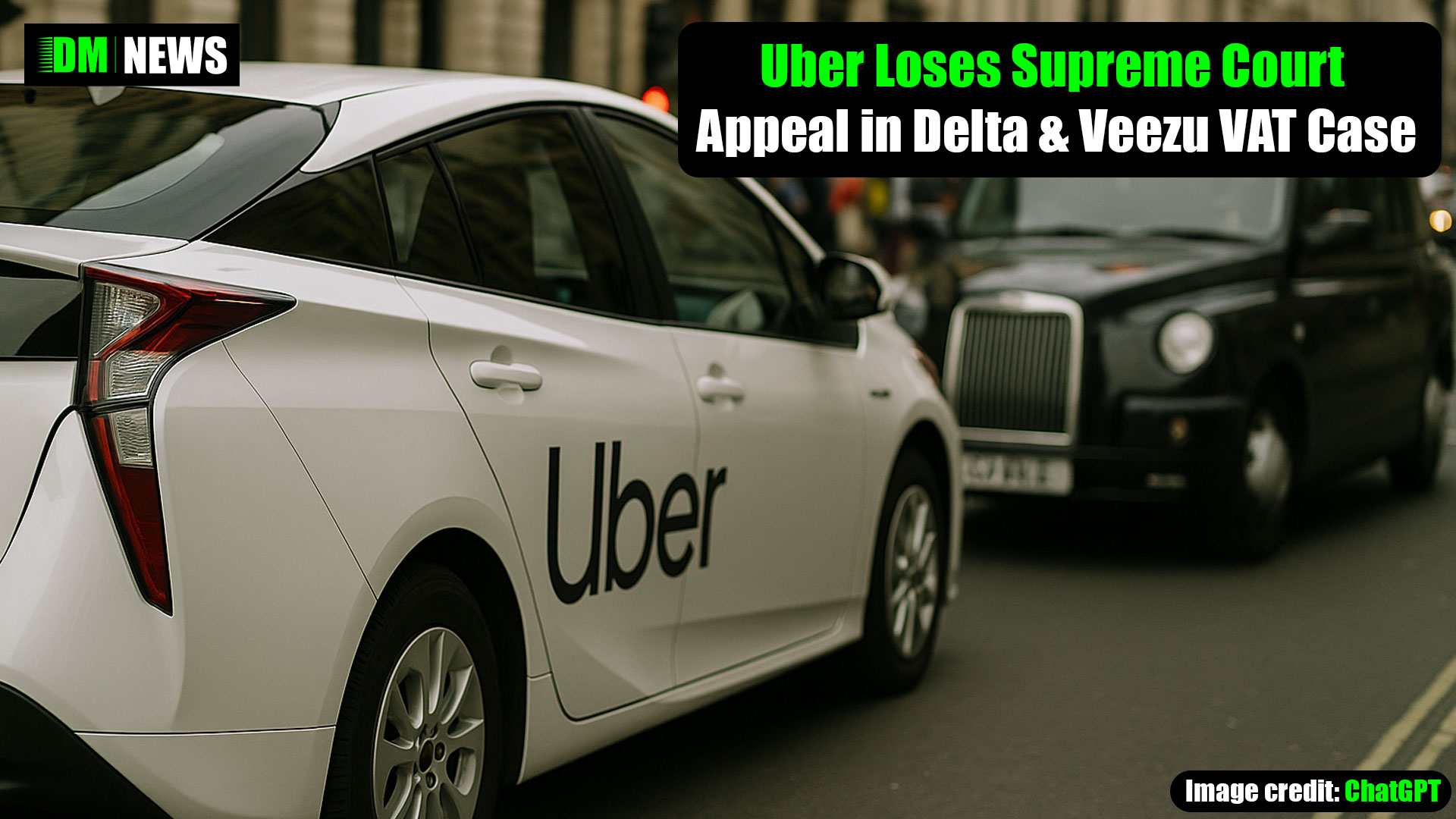
In a landmark ruling delivered on 29 July 2025, the UK Supreme Court unanimously dismissed Uber Britannia Ltd’s appeal in the case brought by Delta Taxis (Merseyside) and Veezu Holdings Ltd, formally known as D.E.L.T.A. Merseyside Ltd & Veezu Holdings Ltd v Uber Britannia Ltd
Uber’s legal strategy had aimed to establish that private hire operators outside London legally contract directly with passengers, which would bring their full fare revenue within the scope of 20% VAT, not just their commission. However, the Supreme Court upheld the Court of Appeal’s decision from July 2024: under the Local Government (Miscellaneous Provisions) Act 1976, firms are not required to act as principal when accepting bookings—meaning they can operate in the agency model and limit VAT liability to their own fee or commission
**Travelling to a UK airport? Get a reliable, hassle-free transfer with DM Airport Transfers — offering UK-wide coverage. Get a free quote and book online today!**
✅ Why It Matters for VAT and Fares
1. Uber’s VAT position
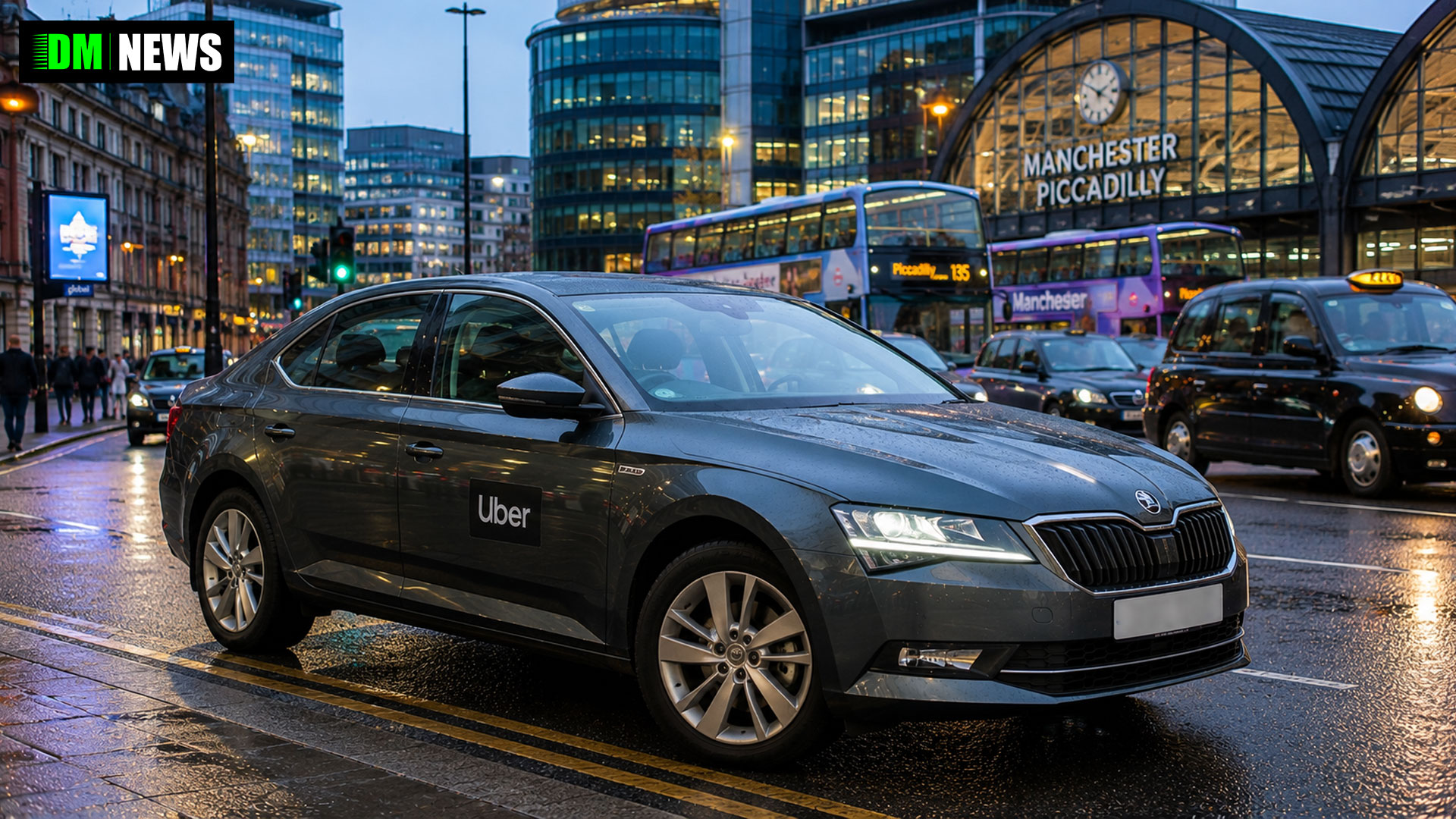
Uber will continue to pay VAT on the full passenger fare, because its model treats the company as the principal, contracting directly with passengers—a structure still liable to 20% VAT on all fare income
2. No VAT on full fare for local operators
Local private hire firms outside London that work under the traditional agency model—where drivers receive fares and operators levy a commission—are only required to charge VAT on the operator’s commission. They do not need to impose VAT on the full passenger fare.
3. Fare stability for passengers and firms
Had Uber won, many operators would have been forced to add 20% VAT to every fare, which would almost certainly have raised passenger prices and potentially driven smaller firms out of business. Now, routes outside London remain VAT‑free to the rider, shielding vulnerable passengers and sustaining business models that rely on driver‑collected fares.
⚖️ Legal Background
- High Court (2023): Ruled in Uber’s favour, declaring that operators must contract directly with passengers outside London, triggering full‑fare VAT liability.
- Court of Appeal (15 July 2024): Overturned that decision following challenges by Delta Taxis and Veezu, restoring the agency model exemption.
- Supreme Court (29 July 2025): Rejected Uber’s final appeal, confirming that private hire operators outside of London need not act as principal—and therefore may limit VAT to commissions only.
The key legal reasoning centred on interpreting the “deeming” clause in Section 56(1) of the 1976 Act—not as proof of a factual contract but as a statutory fiction ensuring operator liability without altering the business model. The court emphasised that operators may continue to operate under different models without automatic VAT exposure on full fares.
🧾 What Private Hire Firms Should Do
| Action | Recommendation |
|---|---|
| Business Model Review | If operating under agency (driver‑paid fares, operator commission), no immediate change is needed. You continue to charge VAT on only your commission. |
| Pricing Strategy | Avoid fare increases based on full VAT—customers will not face a 20% hike so long as the agency model remains. |
| Compliance & Accounting | Maintain records showing you act as agent—not principal—to satisfy HMRC in case of audit. |
| Model shift considerations | If you ever change to a principal model (e.g., operator collects full fare), you must account for VAT on the full amount. |
🧭 Going Forward: The Regulatory Landscape
- Geographic divergence remains: Operators in London are regulated differently under the 1998 Private Hire Vehicles (London) Act, where they do contract as principal and so VAT on full fares still applies. Outside London, under the 1976 Act, the agency model remains valid.
- HMRC & Bolt case: HMRC is challenging the Bolt VAT victory, where a tribunal found Bolt could use the Tour Operators’ Margin Scheme (TOMS)—charging VAT only on its margin, not full fare. That appeal is ongoing. If successful, it may create broader precedent for ride‑hailing platforms.
- Government consultation: Following the initial High Court ruling, the Government launched consultations on private hire VAT—some of which may be revisited in light of this latest Supreme Court outcome.
🔎 Final Thoughts
Uber’s defeat in the Supreme Court is a huge win for traditional private hire operators outside London. It preserves a VAT‑friendly model that keeps fares affordable for passengers—especially those who rely on cars due to public transport gaps or accessibility needs. It also protects the economic viability of small and family‑run operators who cannot absorb a sudden 20% charge.
Uber continues to face significant VAT liabilities, and further clarity may come from the Bolt case and future regulatory updates. But for now, local operators can breathe a sigh of relief—no forced fare increases, no full fare VAT, and continued choice in business structure.
Thanks for visiting DM News! If you’ve got a question, story, or anything you’d like to say, head over to DriverMatty.com — I’d love to hear from you! And while you’re there, don’t forget to check out my other websites and social media channels.