
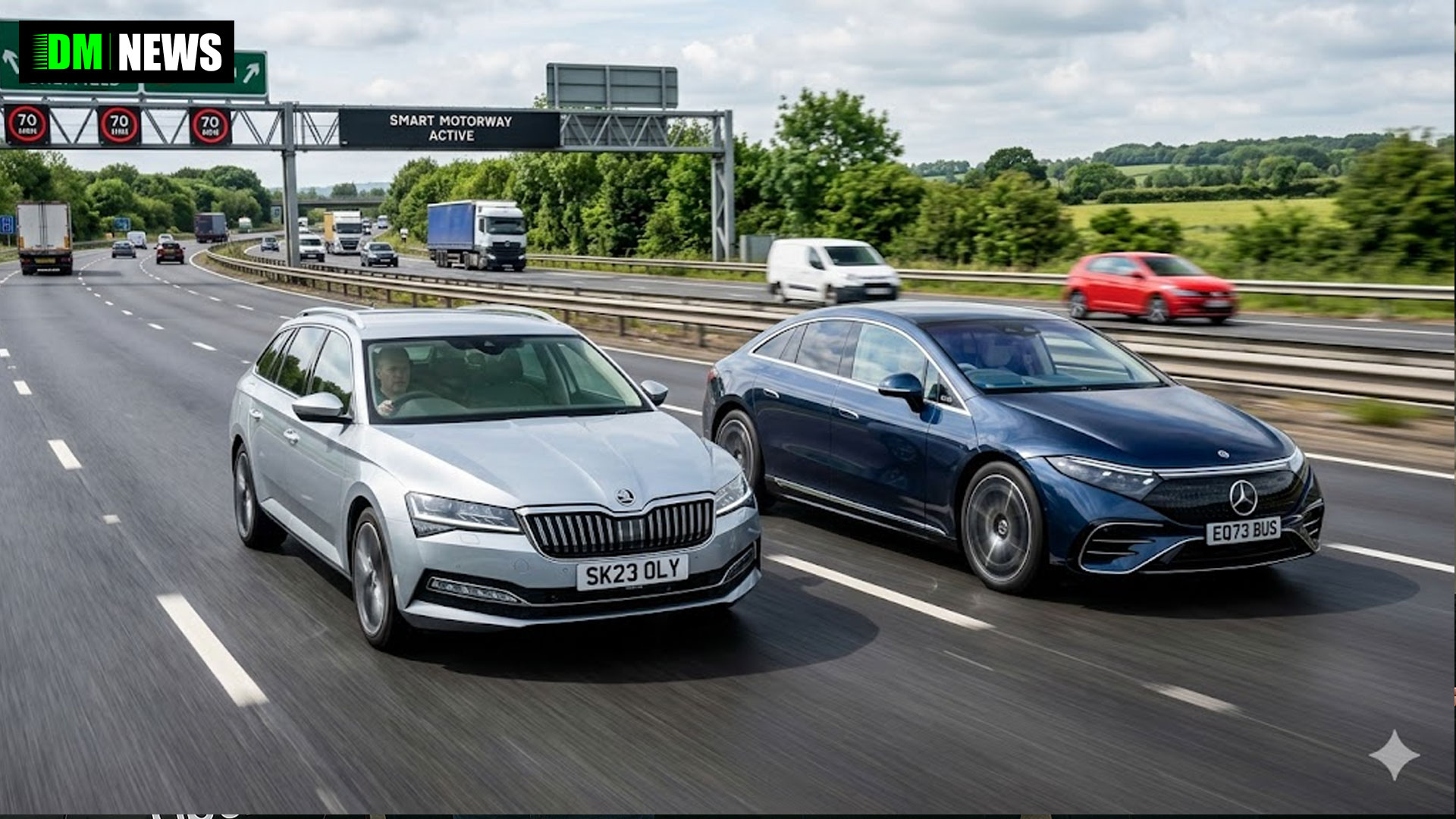
The Motorway Showdown: Diesel vs. Electric – A Cost Revolution
When it comes to long-distance travel on UK motorways, the debate between traditional diesel engines and modern electric vehicles continues to heat up. In a head-to-head comparison, a diesel Skoda Superb taxi and an electric Mercedes EQS chauffeur vehicle were put to the test to determine which truly rules the road in terms of efficiency and cost.
The test involved a long-distance Gatwick run for the diesel Skoda, while the electric Mercedes EQS took on a high-speed motorway journey to Heathrow. Both vehicles were subjected to pure motorway miles at sustained high speeds, providing a clear picture of how these two technologies perform under the pressure of professional long-haul driving.

The Results: A New King of the Road?
For years, diesel has been considered the undisputed king of the motorway due to its range and fuel economy. However, the results of this real-world test suggest that the tide is turning. The Skoda Superb diesel recorded a running cost of 15.01p per mile. In contrast, the Mercedes EQS luxury electric chauffeur car delivered a significantly lower cost of just 5.76p per mile.
The Big Battery Catch: The Home Charging Dilemma
While the running costs of the EQS are impressive, professional drivers face a unique logistical challenge: the sheer size of the battery. The Mercedes EQS boasts a massive usable capacity of approximately 108kWh. While this provides the range needed for airport transfers, it clashes with standard UK home charging setups.
Most UK homes use a 7kW wallbox charger, which delivers roughly 7 units of electricity per hour. To charge an EQS from near empty to full, you are looking at approximately 15 to 16 hours of continuous charging.
This creates a conflict with “off-peak” electricity tariffs. These windows of cheap electricity—offered by providers like Octopus or British Gas—typically last only four to five hours. During a standard four-hour window, a 7kW charger can only return about 28kWh to the battery.
Strategy for Professional Drivers
If you return home with a low battery after a full day of work, a single off-peak window isn’t enough to replenish the EQS. To get back to a full charge, the vehicle must continue drawing power into the morning at the more expensive peak rate. For chauffeurs and taxi drivers, this means “topping up” frequently is essential to keep those 5.76p-per-mile savings intact, rather than waiting for the battery to run dry.
Thanks for visiting DM News! If you’ve got a question, a story tip, or anything you like to share, head over to DriverMatty.com — I love to hear from you. While you’re there, don’t forget to check out my other websites and social media channels.