
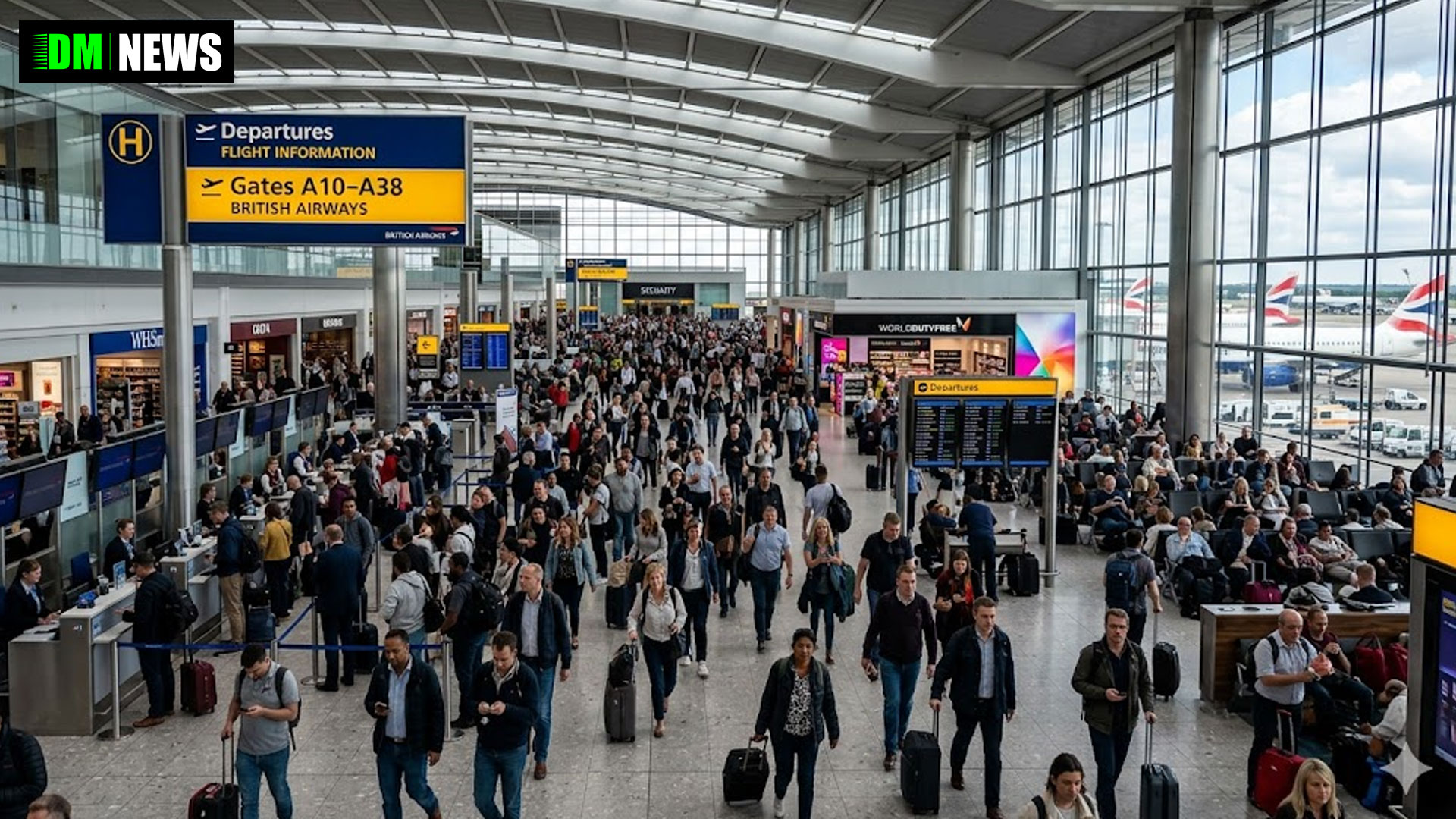
If you’ve been doing airport runs to European destinations this summer, your passengers may well be arriving frazzled — and according to EU border officials, that’s not going to change any time soon.
Europe’s new Entry/Exit System (EES) — which requires non-EU travellers, including British citizens, to have their fingerprints and facial images registered on their first visit to the Schengen Area — has been causing significant delays at airports across the continent since it came into full effect in April 2026. And now, the EU’s own border management agency has admitted the disruption could take one to two years to fully settle down.

Uku Särekanno, deputy executive director at Frontex (the EU border agency), told a travel industry event hosted by ABTA in London that capturing biometric data from non-EU nationals on their first entry to the Schengen Area was “probably the most challenging part” of the rollout. He said the situation was expected to stabilise in one or two years because the most difficult stage was that first enrolment — once travellers are in the system, subsequent journeys are faster.
The problem is that right now, millions of British travellers are going through that process for the first time, all at once, during peak summer travel season. Some member states are coping better than others; Särekanno acknowledged inconsistency across Europe, with some border posts managing the process smoothly and others still struggling. Spain, Portugal, France and Italy have been among the worst affected, with reports of queues stretching for hours.
The International Air Transport Association (IATA) has warned that waits could reach six hours at the most congested airports during peak summer. Passengers have already been caught out: more than 100 easyJet passengers missed a flight from Milan in April when EES processing at the gate overran.
Member states were initially allowed to temporarily suspend EES biometric checks for up to six hours during extreme congestion, but Särekanno confirmed that flexibility will not be extended beyond September. From then on, full compliance is expected across the board.
For drivers working airport transfers to or from Heathrow, Gatwick, Manchester and other UK hubs, it’s worth having a conversation with passengers heading to Europe — and managing their expectations about connection times on the return journey. A passenger who’s just spent three hours in a queue won’t be in the best mood when they finally get in your car.
Thanks for visiting DM News! If you’ve got a question, a story tip, or anything you’d like to share, head over to DriverMatty.com — I love to hear from you. While you’re there, don’t forget to check out my other websites and social media channels.
Sources: