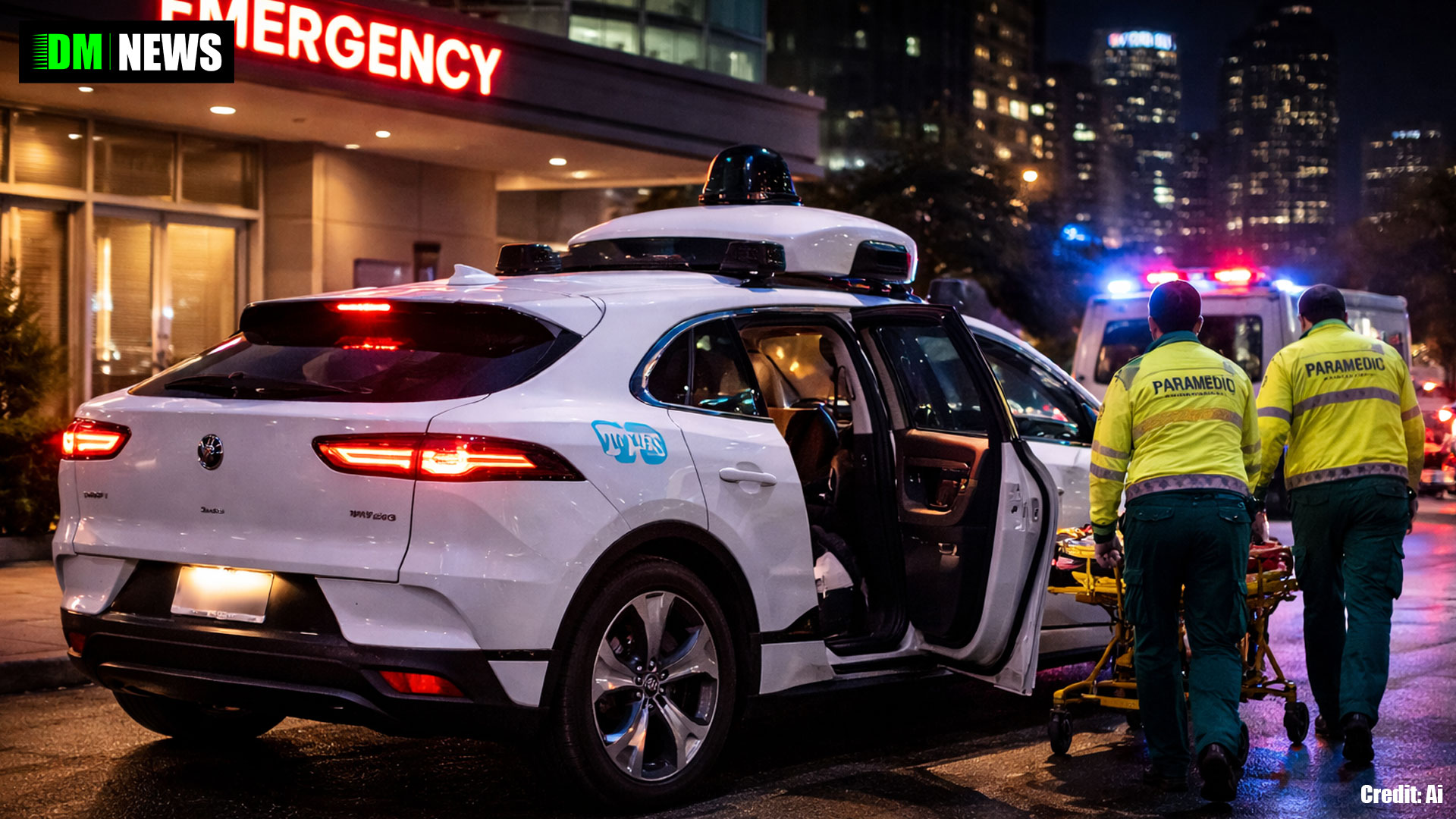
A woman in California gave birth inside a self-driving taxi operated by Waymo after going into labour while travelling to hospital, in an incident that has sparked fresh debate around the real-world use of autonomous vehicles. The story was first reported by Fox News, citing local US media coverage of the unusual birth.
According to the report, the expectant mother was travelling alone in a driverless taxi when her contractions rapidly intensified. With no human driver present to assist, the baby was ultimately delivered inside the vehicle before medical professionals arrived.
The autonomous taxi involved was operated by Waymo, which currently runs fully driverless services in parts of the United States, including California and Arizona.
Emergency Unfolds Inside Driverless Vehicle
The woman reportedly contacted emergency services while still inside the vehicle as her labour progressed. Paramedics were dispatched and met the taxi shortly after the birth took place. Both mother and baby were later taken to hospital and were reported to be in good health.
Waymo confirmed that its support teams were alerted during the journey and assisted emergency services in locating the vehicle.

Driverless Taxis and Passenger Safety Questions
While the outcome was positive, the incident has raised questions about how autonomous taxi services handle medical emergencies — particularly when passengers are travelling alone without a human driver present.
In traditional taxi or private hire vehicles, drivers often play a crucial role in emergencies by offering reassurance, speeding up journeys safely, or stopping to seek help. In a fully autonomous vehicle, those responsibilities are shifted to remote support teams and emergency responders.
DM News Commentary
This story will inevitably fuel ongoing discussions around whether driverless taxis are truly ready for unrestricted public use — especially in scenarios involving vulnerable passengers.
From a UK taxi and private hire perspective, it highlights a key difference between autonomous services and the licensed trade. Human drivers do far more than simply transport passengers from A to B — they manage emergencies, safeguard lone travellers, assist the elderly, and respond instinctively when situations escalate.
While technology continues to advance, incidents like this underline why many passengers still value having a trained, licensed professional behind the wheel. For regulators considering the future of autonomous taxis in the UK, real-world cases like this will be closely examined.
Thanks for visiting DM News! If you’ve got a question, story, or anything you’d like to say, head over to DriverMatty.com — I’d love to hear from you! And while you’re there, don’t forget to check out my other websites and social media channels.