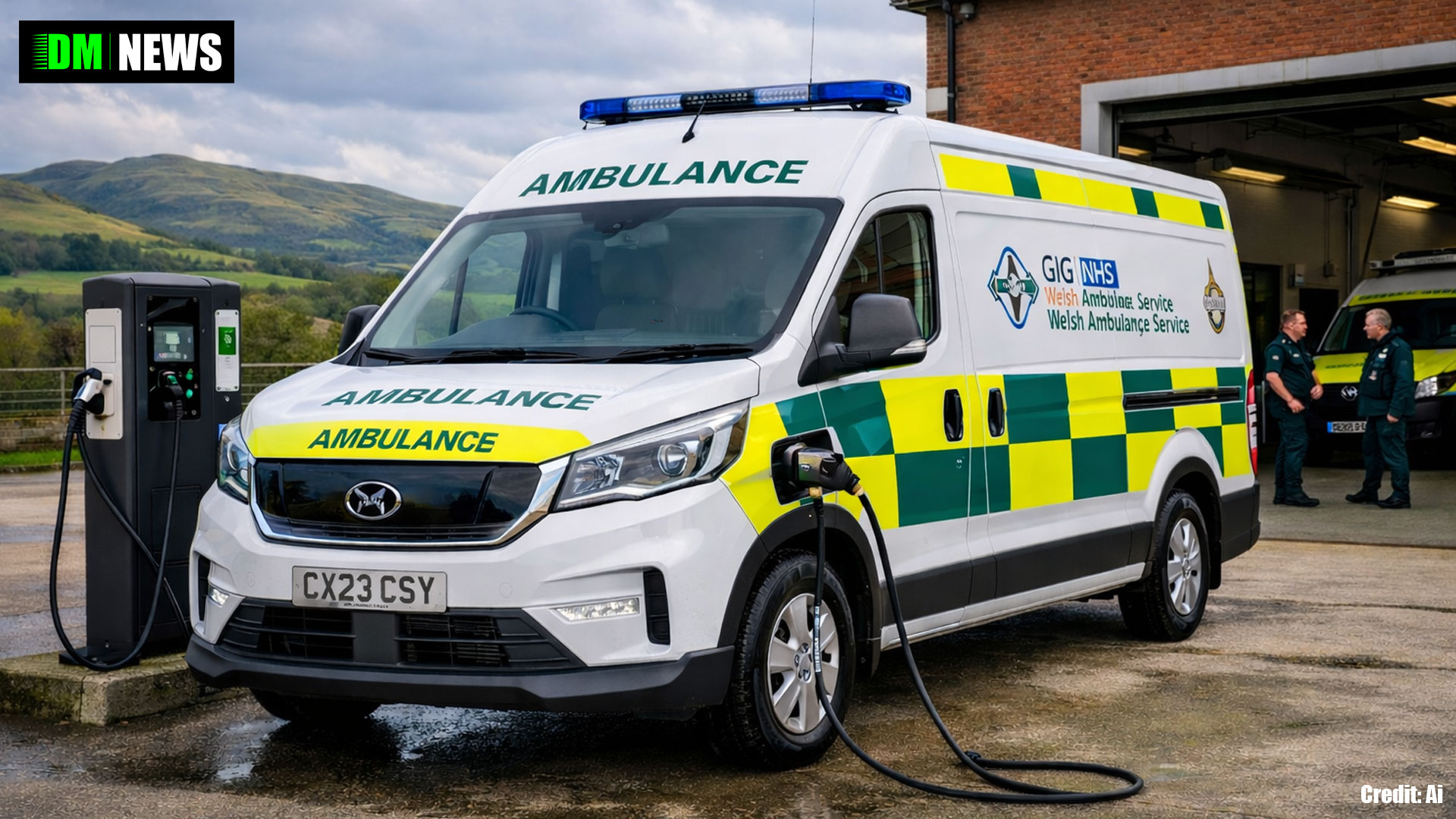
The Welsh Ambulance Service has unveiled its first fully electric vehicle fleet in North Wales, as part of a major push to cut emissions and modernise frontline transport. The move was reported by Deeside.com, which confirmed that the new electric vehicles are now operational across the region.
According to the article, the Trust has introduced ten fully electric MAXUS eDELIVER 5 vans, marking the first time pure-electric vehicles have been deployed within the Welsh Ambulance Service fleet. These vehicles are being used for logistics and support duties rather than emergency blue-light response, allowing the service to reduce emissions without compromising response times.
The electric rollout forms part of a £22.4 million Welsh Government–funded vehicle replacement programme, which also includes 20 Ford Transit Custom plug-in hybrid vehicles. The wider investment is aimed at gradually reducing reliance on diesel while maintaining a reliable, resilient fleet across Wales.
The Trust currently operates around 800 vehicles nationwide, and the introduction of electric and hybrid models is expected to play a key role in meeting Wales’ public-sector net-zero ambitions. Charging infrastructure has been installed at multiple ambulance stations to support the transition, ensuring the vehicles can be deployed effectively in daily operations.
Fleet managers described the new electric vans as quieter, cleaner, and more comfortable for staff, while also delivering long-term environmental and cost benefits as fuel and maintenance demands are reduced.

DM News Commentary
This is another clear signal of where transport is heading — electric is no longer experimental, it’s operational. If frontline emergency services can deploy fully electric vehicles reliably across North Wales, it raises serious questions about how quickly the private hire and airport transfer sectors will be expected to follow.
For taxi and PHV drivers, especially those working long regional or airport runs, the challenge isn’t just the vehicle — it’s charging access, downtime, and real-world range. Public services benefit from depot-based charging and planned routes, something many private drivers still don’t have.
That said, moves like this inevitably influence policy. As councils and governments invest in electric fleets, pressure will continue to mount on private operators to switch — often before the infrastructure fully catches up. Drivers should be watching these rollouts closely, because today it’s ambulances and councils, tomorrow it’s licensing conditions.
Thanks for visiting DM News! If you’ve got a question, a story tip, or anything you’d like to share, head over to DriverMatty.com — I’d love to hear from you.
While you’re there, don’t forget to check out my other websites and social media channels.