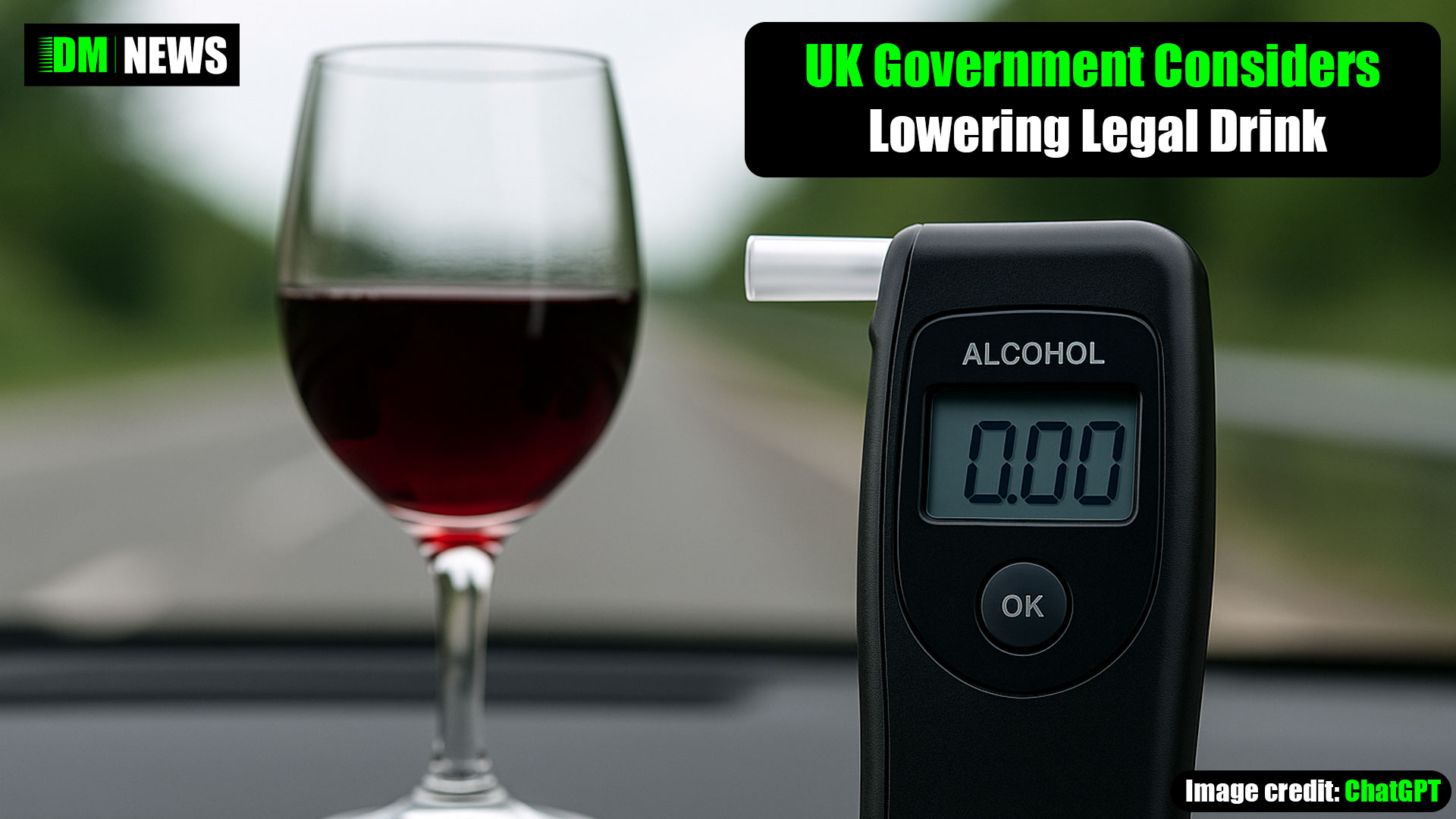
The UK government is weighing up plans to cut the legal drink-drive limit in England and Wales in a move that could bring it in line with Scotland and most of Europe.
New Road Safety Strategy Under Consultation
As part of what ministers are calling the biggest shake-up of road safety laws since 2006, proposals are being drawn up to reduce the legal blood-alcohol concentration (BAC) limit from 0.08% (35 micrograms per 100 ml of breath) to 0.05% (22 micrograms).
The change, expected to be included in a public consultation this autumn, would bring England and Wales in line with Scotland, which adopted the lower limit in 2014, and with European Union standards.
Rising Road Casualties Prompt Action
The move comes against a backdrop of increasing road deaths and serious injuries.
Government data shows that in 2024 there were 1,633 road fatalities and nearly 28,000 serious injuries—the highest figures in years.
Campaigners, including the Institute for Alcohol Studies (IAS), have long argued for a lower limit, citing research that shows drivers are six times more likely to be involved in a fatal crash at 0.08% BAC compared to 0.00%.
Lessons from Scotland
When Scotland lowered its limit in 2014, the impact on accident statistics was less pronounced than expected.
Some experts say this was due to a lack of sustained enforcement and public awareness campaigns. Critics warn that unless the new limit is backed by high-visibility policing and education, the change may not deliver the safety benefits hoped for.
Public Opinion Strongly in Favour
Polling suggests the majority of the UK public supports the change, with 77% favouring a lower drink-drive limit. Many believe the move would remove ambiguity, sending a clear message that “if you drink, don’t drive”.
However, some drivers have expressed concerns about unintended consequences, such as reduced trade for rural pubs and the potential for criminalising people after consuming even small amounts of alcohol.
What Happens Next?
The proposals will be included in the Department for Transport’s road safety consultation, which will also cover:
- Harsher penalties for drug-driving
- Tighter rules for older drivers
- Stronger enforcement on uninsured drivers
- Increased penalties for not wearing a seatbelt
If approved, the new drink-drive limit could come into force as early as 2026.
**Travel in comfort with DM Airport Transfers — offering 24/7 UK-wide taxi, minibus, and executive vehicle services to all airports, train stations, ports, events, and more. From solo travellers to large groups, our professional drivers and modern fleet ensure a smooth, stress-free journey every time. Book online today and let us take you there.**
Thanks for visiting DM News! If you’ve got a question, story, or anything you’d like to say, head over to DriverMatty.com — I’d love to hear from you! And while you’re there, don’t forget to check out my other websites and social media channels.