A screenshot shared widely online has sparked fresh debate about the treatment of Uber drivers and the extreme situations some say they are forced to deal with while working on the platform.
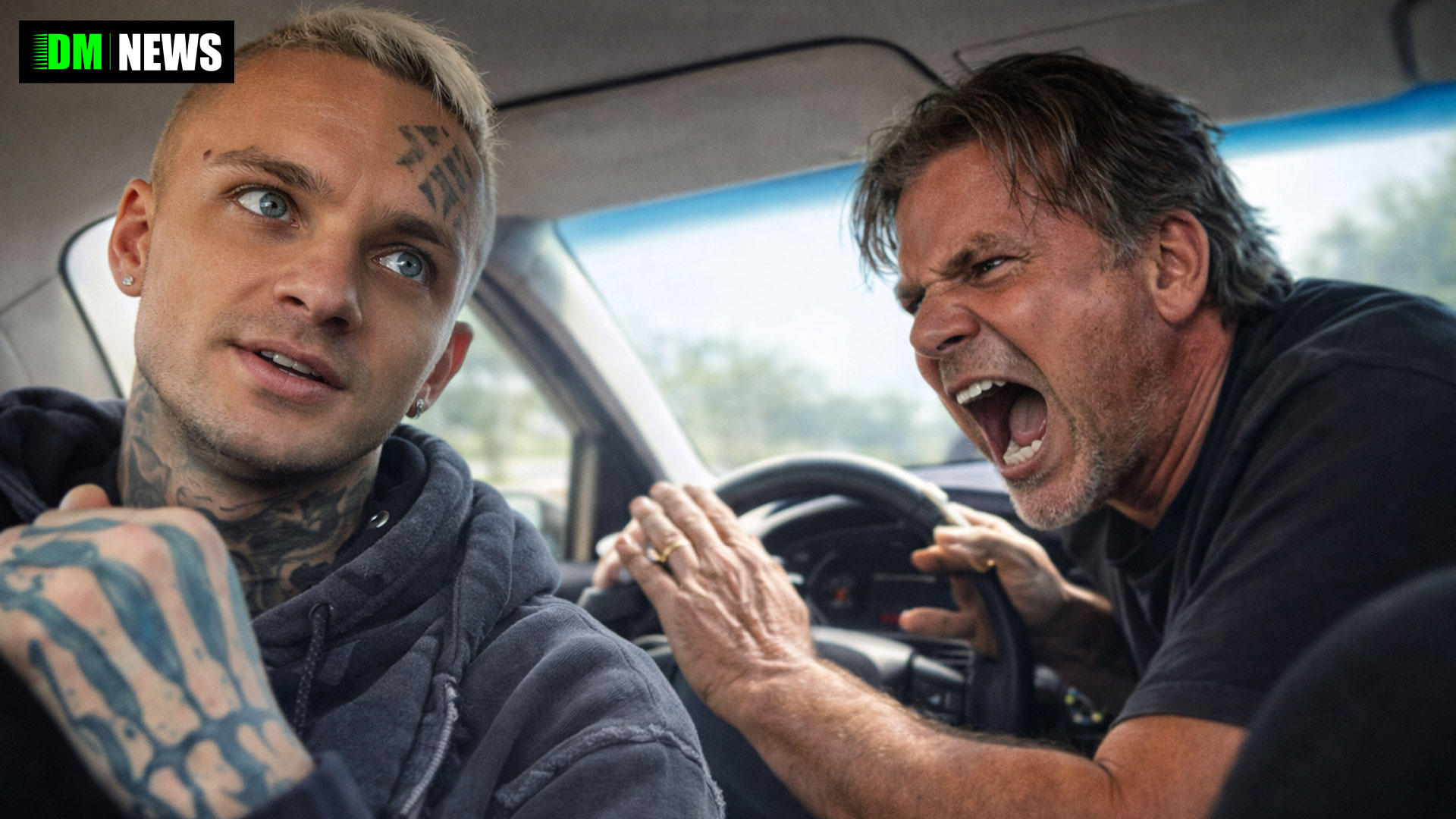
The image shows a conversation between a driver and a passenger named “Brian” after a ride was requested by a coordinator. In the messages, the passenger repeatedly asks the driver to cancel the trip, claiming to have both Covid and flu and later stating they had vomited. The passenger insists they are unable to cancel the ride themselves, giving increasingly implausible reasons.
The driver responds by explaining that cancelling would negatively impact their driver rating and advises the passenger to cancel on their end instead. Shortly afterwards, the conversation takes a disturbing turn when the passenger threatens to report the driver to the police, falsely accusing them of sexual harassment and attempted rape — despite the two never meeting and the driver not having arrived.
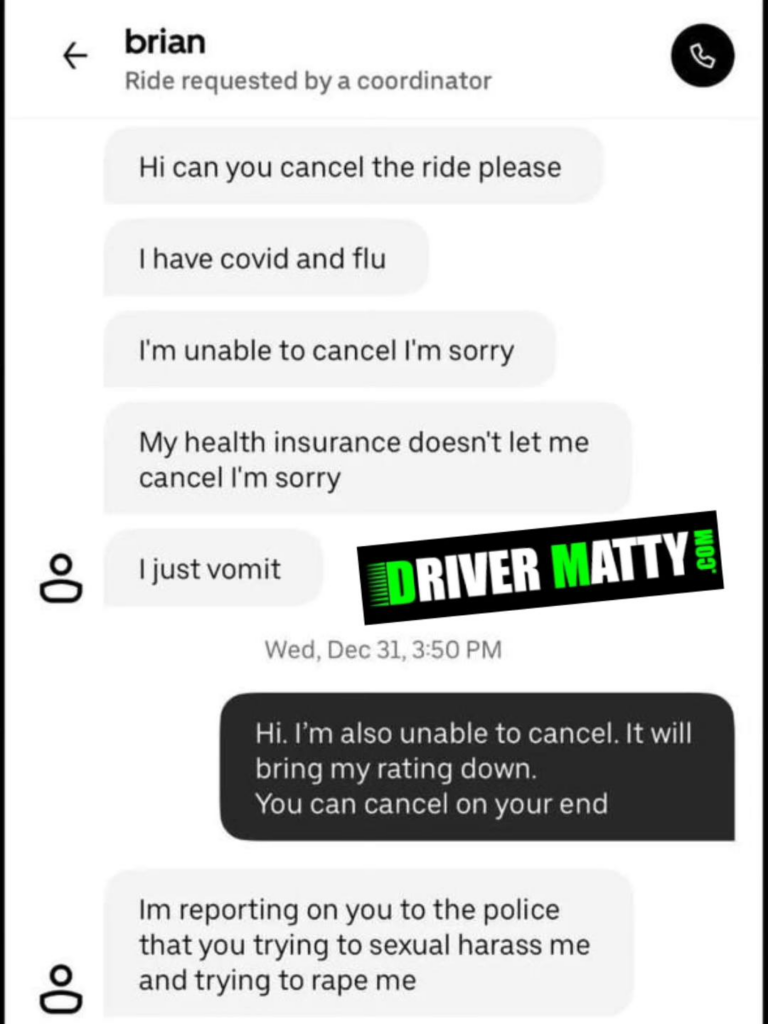
The driver replies by warning that making a false police report is a serious criminal offence.
The screenshot has since been used by drivers as an example of the kind of abusive behaviour, manipulation, and false allegations they fear while working in the gig economy.
DM Commentary
This screenshot, whether isolated or not, reflects a very real fear shared by many drivers across the UK and beyond. App-based drivers operate with limited protection, often relying entirely on in-app messaging as evidence of what actually happened.
False allegations — particularly of serious crimes — can be career-ending for a driver, even if later proven untrue. Accounts can be suspended instantly, income can vanish overnight, and reputations can be permanently damaged before any investigation concludes.
Drivers are expected to remain calm, professional, and compliant at all times, yet incidents like this highlight a power imbalance where some passengers appear willing to weaponise the reporting system to avoid cancellation fees or responsibility.
This is why many drivers are calling for stronger safeguards: clearer cancellation rules, better support during disputes, and a fairer review process that considers driver evidence before punitive action is taken.
Most passengers are decent people. But examples like this show why drivers continue to push for better protection, transparency, and balance on ride-hailing platforms.

Thanks for visiting DM News! If you’ve got a question, a story tip, or anything you’d like to share, head over to DriverMatty.com — I’d love to hear from you.
While you’re there, don’t forget to check out my other websites and social media channels.