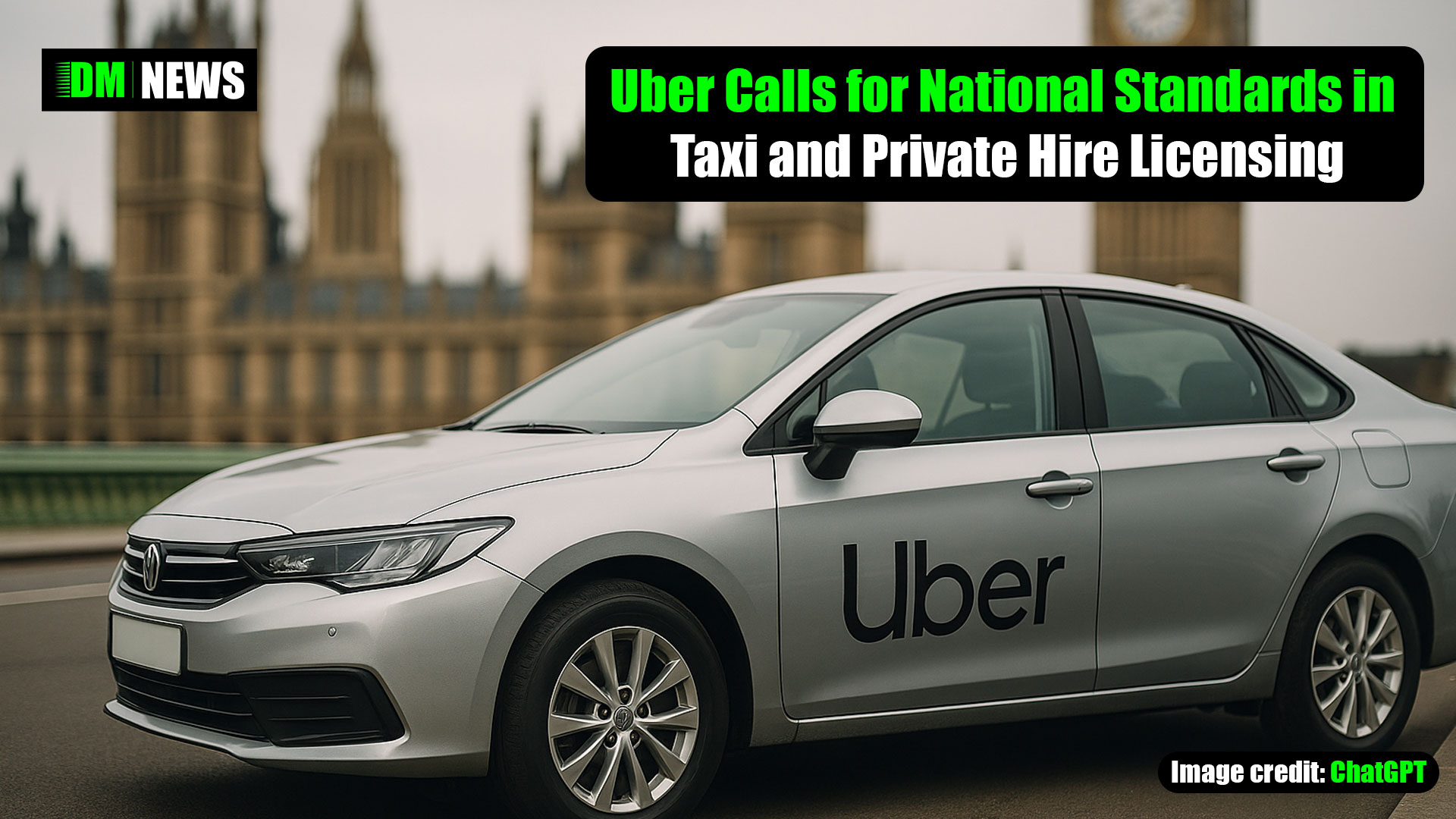
Uber has urged the UK Government to introduce legally binding national standards for taxi and private hire vehicle (PHV) licensing, arguing that a consistent framework would improve safety, enforcement, and passenger confidence across England.
In written evidence to Parliament’s Taxi and Private Hire Vehicle (TPHV) Licensing Inquiry, the company said taxis and PHVs are an essential part of the transport system, providing millions of journeys each week. Since Uber’s UK launch in 2012, more than one billion trips have been made on its platform, with over 100,000 drivers currently using the app.
Key Recommendations from Uber
Uber’s evidence highlights five core proposals for government:
- National licensing standards – Legally binding rules to ensure the same high bar for safety and driver checks across all regions.
- In-car video clarity – A national framework to support wider adoption of video recording for accountability and safeguarding.
- Better data sharing – A real-time national database of licensed drivers and vehicles, accessible to operators, to prevent delays and errors.
- Cross-jurisdictional enforcement – New laws to allow licensing officers to take action against drivers or vehicles licensed anywhere in England.
- Harnessing technology – Encouraging use of GPS tracking, automated safety alerts, and document verification to raise safety standards.

Safety at the Core
Uber stressed that 99.9% of its global trips end without incident, but said even one incident is too many. Its safety toolkit includes:
- GPS tracking on every trip.
- Facial recognition verification to ensure only licensed drivers can log in.
- Direct integrations with DVSA and insurance companies.
- Ongoing driver and passenger feedback with dedicated safety teams investigating issues.
- Partnerships with organisations such as the GMB Union, The Survivors Trust, Barnardo’s, and the AA on training and safeguarding.
Concerns About Local Variation
Uber acknowledged that licensing authorities uphold high standards, but warned of “inconsistencies” in approach. The company said passengers should feel confident that any licensed driver or operator meets the same safety standards nationwide.
On the contentious issue of cross-border hiring, Uber rejected calls for a ban. Instead, it argued that national standards are the best solution, warning that restrictions would damage service reliability, regional connectivity, and government net-zero ambitions.
Looking Ahead
Uber’s evidence concludes with praise for drivers who “personally uphold the highest standards in safety and professionalism every day.” The company says Parliament now has a “significant opportunity” to strengthen the licensing system in England, ensuring improved outcomes for drivers, passengers, and the public.
Source: Parliament Committee
Thanks for visiting DM News! If you’ve got a question, story, or anything you’d like to say, head over to DriverMatty.com — I’d love to hear from you! And while you’re there, don’t forget to check out my other websites and social media channels.