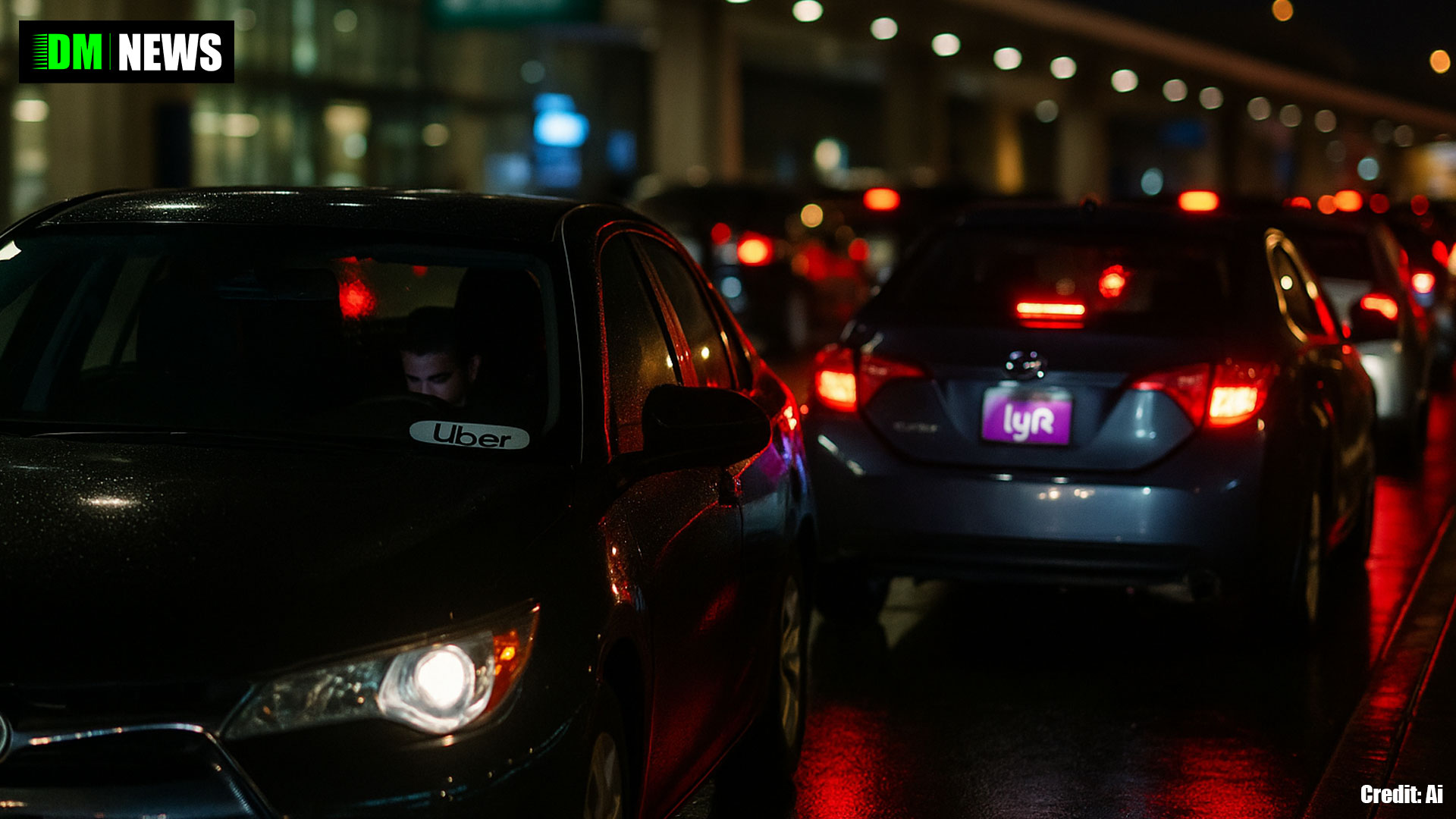
Uber and Lyft are facing renewed criticism in the United States after a series of lawsuits and state investigations revealed that both companies allegedly withheld millions of dollars in driver pay through hidden deductions, misleading earnings claims, and opaque pricing systems.
The cases, led by state regulators and federal agencies, expose what labour advocates call one of the largest examples of “algorithmic wage theft” in the modern gig economy.
$328 million settlement over improper deductions
In New York, both Uber and Lyft agreed to pay a combined $328 million (£270 million) to settle claims that they had illegally deducted taxes and fees from driver pay that should have been charged to passengers.
The New York Attorney General’s Office accused the companies of “systematically skimming from drivers’ wages for years” by subtracting state sales taxes and Black Car Fund fees directly from drivers’ earnings.
Under the settlement, Uber paid around $290 million and Lyft $38 million, making it one of the largest wage-theft settlements in US history. The deal also required both firms to introduce a guaranteed minimum pay rate, offer paid sick leave, and give drivers clearer earnings statements.
Drivers affected by the case were urged to submit claims to recover their unpaid wages by early 2025.
Misleading pay promises and inflated adverts
The US Federal Trade Commission (FTC) also fined Lyft $2.1 million in 2024 for misrepresenting driver earnings. The company had used inflated hourly rates in recruitment adverts, often including passenger tips and quoting the pay of top-earning drivers to make the job appear more profitable.
Regulators said the practice gave potential drivers “a false impression of likely income” and forced the company to update how it advertises pay. Lyft must now base any pay claims on average earnings and provide transparent evidence of how those figures are calculated.
How “dynamic pricing” plays a role
Investigators say part of the wage skimming stems from the way both companies set fares.
Uber and Lyft use dynamic pricing algorithms that automatically adjust fares based on supply and demand — but many drivers argue that these systems also allow the companies to take a larger share of each fare without notice.
Studies by the National Employment Law Project (NELP) suggest that Uber’s “take rate” — the percentage it keeps from each trip — has steadily risen, leaving many US drivers earning less than the local minimum wage once vehicle costs are factored in.
Because the pricing formula is kept secret, drivers have no way to verify how much of a fare goes to them or to the platform — a practice worker advocates describe as “algorithmic skimming.”
Lawsuits spreading beyond New York
The controversy has now spread to other US states.
In California, Uber and Lyft face separate wage-theft and misclassification lawsuits that could result in billions of dollars in back pay.
Officials in Los Angeles and San Francisco allege that the companies wrongly treated drivers as independent contractors and failed to reimburse expenses such as fuel and maintenance.
California’s Labour Commissioner has also accused both firms of underpaying thousands of drivers before the passage of Proposition 22 — the 2020 ballot initiative that carved out an exemption for gig-economy platforms from certain labour laws.
Drivers push back against “algorithmic control”
Drivers’ unions and advocacy groups say that wage skimming is only part of a wider problem: the lack of transparency and control drivers have over their work.
Many report being “locked out” of the app when too many drivers are online, or being deactivated with little or no explanation — cutting them off from income overnight.
Campaigners say these algorithmic systems are designed to maximise company profits while keeping drivers isolated, unable to collectively monitor or challenge how their pay is calculated.
Why this matters
For US regulators, the Uber and Lyft cases highlight the growing challenge of enforcing labour laws in the gig economy.
Even after record-breaking settlements, many drivers say they still don’t understand how their pay is determined or whether new systems truly fix the issue.
Labour experts warn that without stronger oversight and algorithmic transparency, these companies could continue diverting millions from driver pay under new names and models.
And with Uber operating globally — including across the UK — British regulators will likely be watching closely for any similar patterns.
Thanks for visiting DM News!
If you’ve got a question, story, or anything you’d like to say, head over to DriverMatty.com — I’d love to hear from you! And while you’re there, don’t forget to check out my other websites and social media channels.
Sources
- New York Attorney General – Uber and Lyft ordered to pay $328 million to drivers
- Associated Press – Uber, Lyft to pay $328M over withheld driver pay
- The Verge – Lyft fined $2.1M for misleading driver earnings claims
- National Employment Law Project – Unpacking Uber and Lyft’s predatory take rates
- CalMatters – Uber and Lyft could owe billions to California gig workers