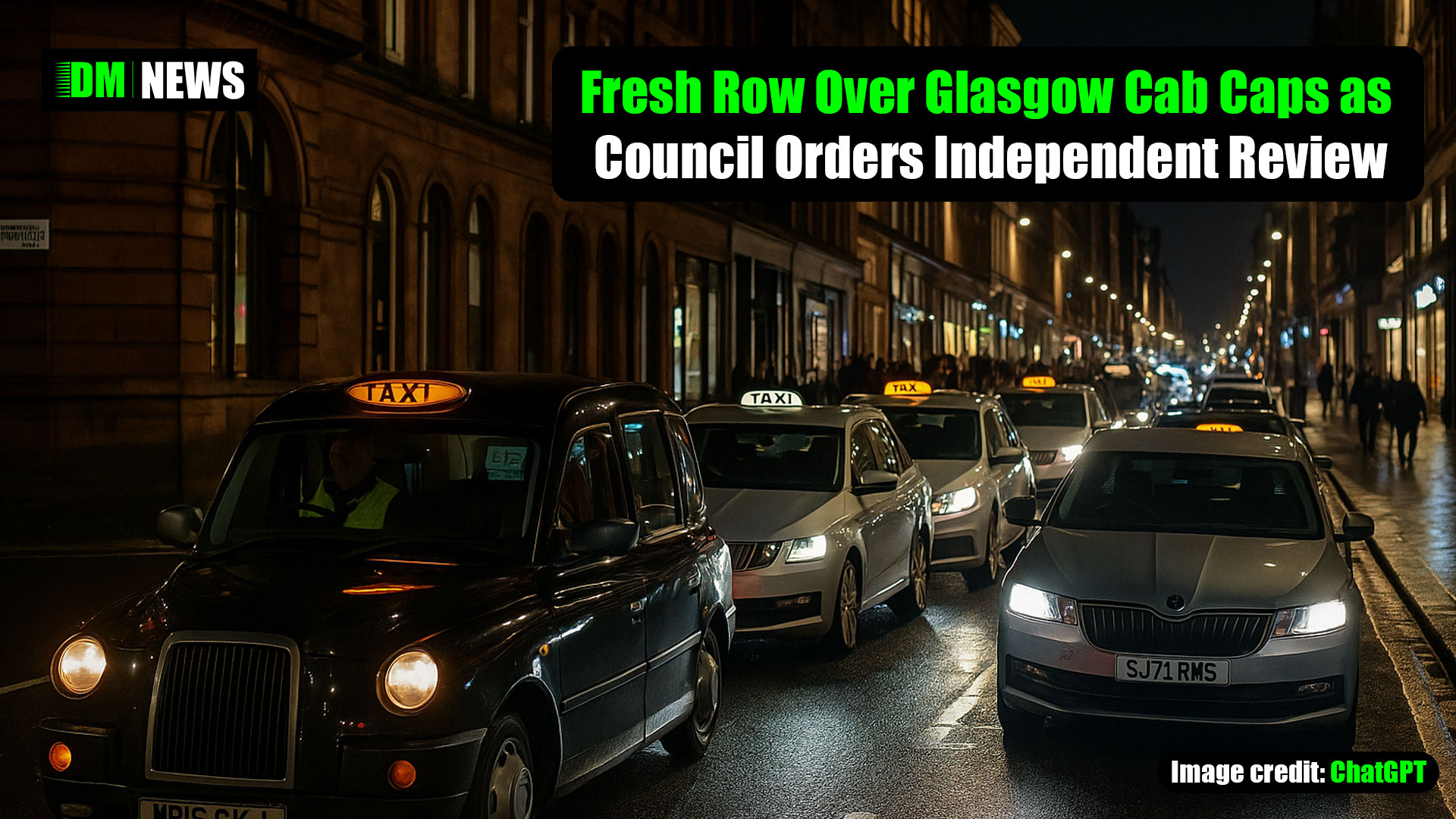
Glasgow’s long-running debate over limits on taxi and private hire licences has reignited, after councillors agreed to commission an independent review of the city’s controversial overprovision policies.
The move has sparked anger among trade bodies, who argue the decision undermines overwhelming public support for keeping the current limits in place.
Public Consultation vs Business Pressure
A public consultation earlier this year drew more than 4,400 responses. An emphatic 93% backed keeping the cap on private hire licences and 90% supported the existing taxi cap.
Despite this, Glasgow City Council’s licensing committee voted to proceed with a fresh independent study, citing “conflicting views” raised in written submissions.
The current limits stand at 1,420 hackney taxi licences and 3,450 private hire licences.
The Scottish Private Hire Association (SPHA) has criticised the move, accusing the council of sidelining public opinion in favour of “a handful of influential voices.”
A spokesperson said:
“Over 3,800 members of the public reported no issues with securing a ride. This level of public engagement should have been decisive. Instead, it feels like if the council doesn’t get the answer it wants, it will keep trying until it does.”
Push From Night-Time Economy and Uber
Business leaders, including Glasgow Chamber of Commerce, the city’s public-private centre taskforce, and council leader Susan Aitken, argue the caps are damaging the late-night economy by restricting transport options.
Ride-hailing app Uber has also urged councillors to lift restrictions, pointing to rising demand. The company says demand for Uber journeys in Glasgow has surged by 47% since 2019, while the supply of cars has grown by just 7%.
An Uber spokesperson said:
“It’s right that an independent review is carried out. The data shows a shortage of private hire cars is harming the night-time economy. We look forward to engaging in the process.”
Safety, Competition and Driver Impact
Trade groups, including Glasgow Taxis and Unite the union, argue removing the caps would flood the market, force drivers to work longer hours, and create new safety issues.
Glasgow Taxis said there is “limited evidence of unmet demand,” suggesting waiting times are caused by operational inefficiencies rather than a shortage of vehicles.
The SPHA echoed those concerns, warning that powerful commercial interests appear to be exerting disproportionate influence on local governance.
What Happens Next
The independent review, to be conducted by an external transport consultant, will assess:
- Competition and pricing
- Public attitudes and behaviour
- The impact on the city centre economy
- Comparisons with other UK cities
- Effects on driver earnings
The consultant’s findings will determine whether Glasgow keeps its caps, loosens restrictions, or opens up the market entirely.
Until then, the existing limits will remain in place.
The issue has become a flashpoint between the city’s business community and the licensed taxi and private hire trades, with both sides claiming public safety and Glasgow’s reputation are at stake.
Thanks for visiting DM News! If you’ve got a question, story, or anything you’d like to say, head over to DriverMatty.com — I’d love to hear from you! And while you’re there, don’t forget to check out my other websites and social media channels.