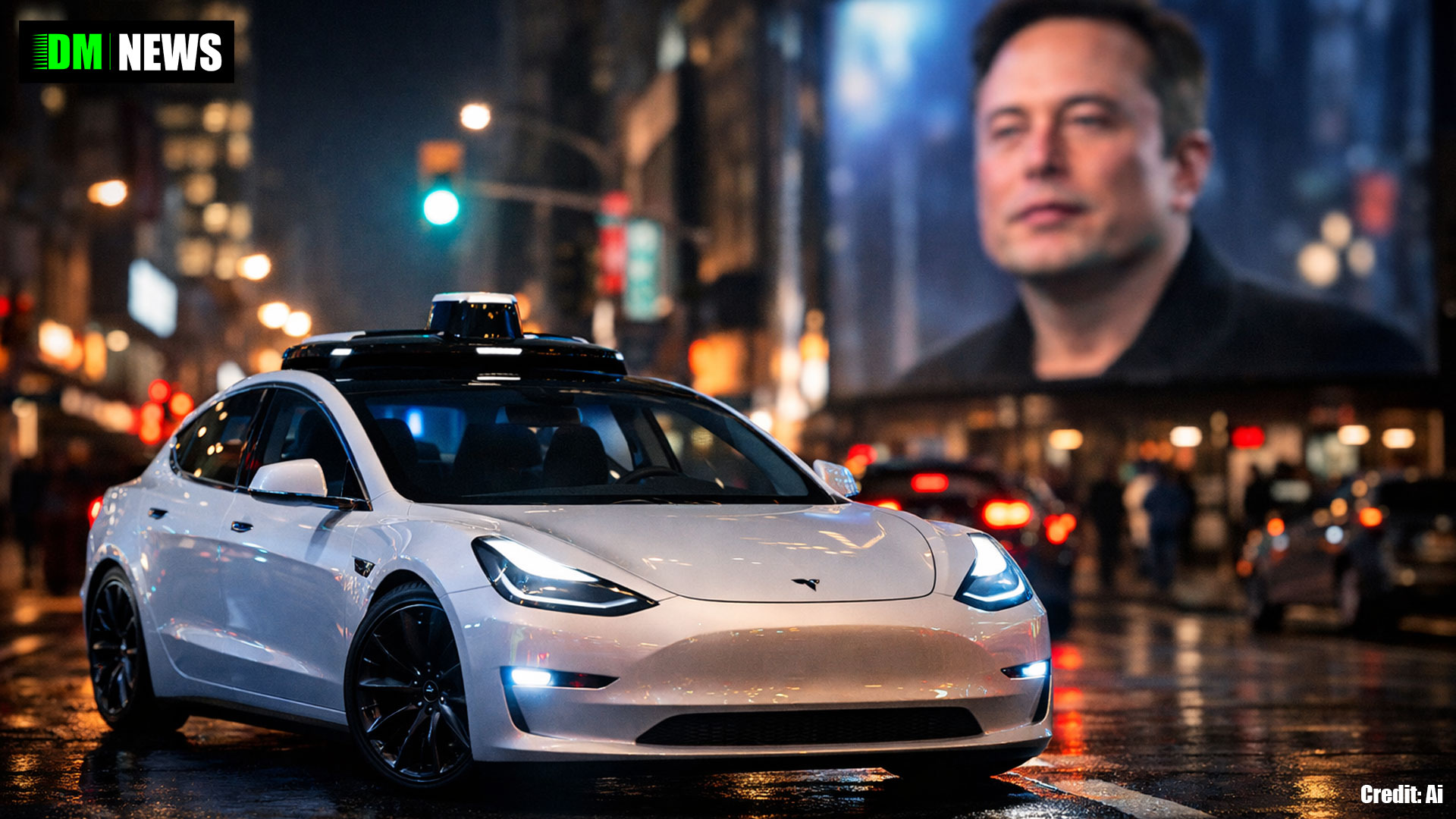
A recent Instagram reel featuring Elon Musk has sparked fresh discussion about the future of ride-hailing and autonomous vehicles.
In the clip, Musk states that there is “no need” for Tesla to buy Uber, outlining instead Tesla’s own long-term vision for a self-driving fleet.
According to Musk in the video, Tesla already has “millions of cars” that will be able to operate autonomously in the future. He explains that Tesla’s approach would involve a combination of:
- A Tesla-owned fleet of vehicles
- Private Tesla owners choosing to add or remove their cars from a shared autonomous network
Musk claims that existing Tesla owners could earn money by allowing their cars to join the self-driving fleet when not in use. He even suggests it may be possible for owners to earn more from the vehicle being added to the autonomous network than the cost of leasing it.

The comments reinforce Tesla’s ongoing robotaxi ambitions, positioning the company as a potential direct competitor to existing ride-hailing platforms rather than an acquirer.
While the reel does not provide timelines or operational details, it makes clear that Tesla sees its autonomous network as something built from within — leveraging its existing customer base and future self-driving capability — rather than through purchasing an established platform like Uber.
DM News Commentary
Musk’s comments are interesting because they hint at a very different model to the current Uber-style structure.
Today, platforms like Uber rely on independent drivers using their own vehicles. What Musk is describing is a world where the vehicle itself becomes the revenue-generating asset — without a driver inside.
If Tesla were able to successfully deploy true autonomous driving at scale, it would bypass the traditional private hire driver model entirely. Instead of drivers choosing jobs, Tesla owners would simply “switch on” their vehicle for autonomous work.
However, there are still major unknowns:
- Regulatory approval in different countries
- Insurance structures
- Liability in the event of incidents
- Real-world reliability in complex urban environments
For UK taxi and private hire drivers, this remains something to watch rather than fear today. Full autonomy at scale is not currently operational here, and licensing laws would require significant change before such a fleet could legally operate.
But one thing is clear: Tesla is positioning itself to compete with ride-hailing platforms directly — not partner with or purchase them.
The question is not whether Tesla will buy Uber.
The bigger question is whether Tesla believes it can replace the model altogether.
Thanks for visiting DM News! If you’ve got a question, story, or anything you’d like to say, head over to DriverMatty.com — I’d love to hear from you! And while you’re there, don’t forget to check out my other websites and social media channels.