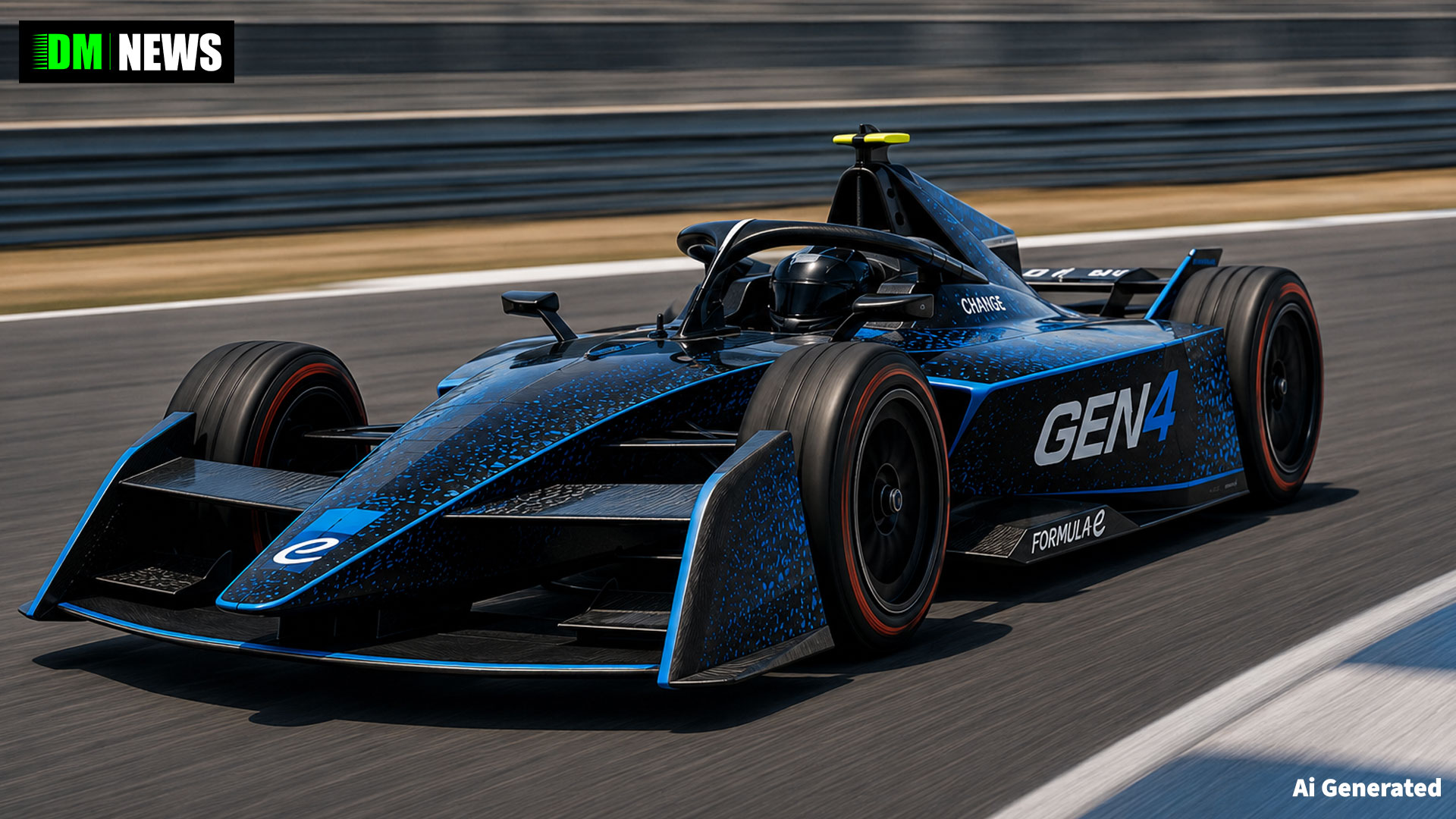
Formula E has lifted the wraps off its all-new Gen4 race car, and the numbers are genuinely eye-watering — even by motorsport standards.
Officially unveiled on 5 November 2025 and demonstrated at Circuit Paul Ricard in southern France in April this year, the Gen4 will headline the all-electric championship from the 2026/27 season. According to the FIA and Formula E, it’s capable of exceeding 335 km/h — that’s over 208 mph — and will hit 0–62 mph in roughly 1.8 seconds. That’s quicker off the line than a current Formula 1 car.
Under the bodywork, the Gen4 produces up to 600 kW (around 805 bhp) in qualifying and attack mode, with around 450 kW available during the race. Formula E says that’s a roughly 70 per cent increase in peak power over the outgoing Gen3 Evo car, and enough to make the Gen4 the most powerful machine the series has ever raced.

It’s also the world’s first open-wheel single-seater with permanent, active all-wheel drive. Combined with anti-lock brakes and unlimited traction control, the FIA says drivers will get unmatched grip, sharper cornering and far more overtaking opportunities. Officials are projecting lap times up to 10 seconds quicker per lap in qualifying trim than the Gen3.
So why should this matter to anyone outside of motorsport? Formula E has always pitched itself as a moving test bed for road-going EV tech. The Gen4 introduces ultra-fast 600 kW charging, more efficient motors, and a battery built without rare-earth minerals. It’s also designed to be 100 per cent recyclable, with each car built from at least 20 per cent recycled materials.
Manufacturers backing the Gen4 era include Porsche, Jaguar, Nissan, Mahindra, Lola Cars and Stellantis (with Opel joining the grid for 2026/27). Bridgestone replaces Hankook as tyre supplier from the car’s debut.
Formula E CEO Jeff Dodds called the Gen4 “a statement of intent,” adding that the championship is “now delivering performance levels that were thought impossible for electric vehicles just five years ago.”
For UK drivers watching the EV transition unfold on our own roads, it’s a useful reminder: the technology developed in motorsport often filters down into the cars we end up driving for a living. Faster charging, better batteries and smarter all-wheel drive systems could all be heading our way in the next generation of electric taxis and private hire vehicles.
Thanks for visiting DM News! If you’ve got a question, a story tip, or anything you’d like to share, head over to DriverMatty.com — I love to hear from you. While you’re there, don’t forget to check out my other websites and social media channels.
Sources: